



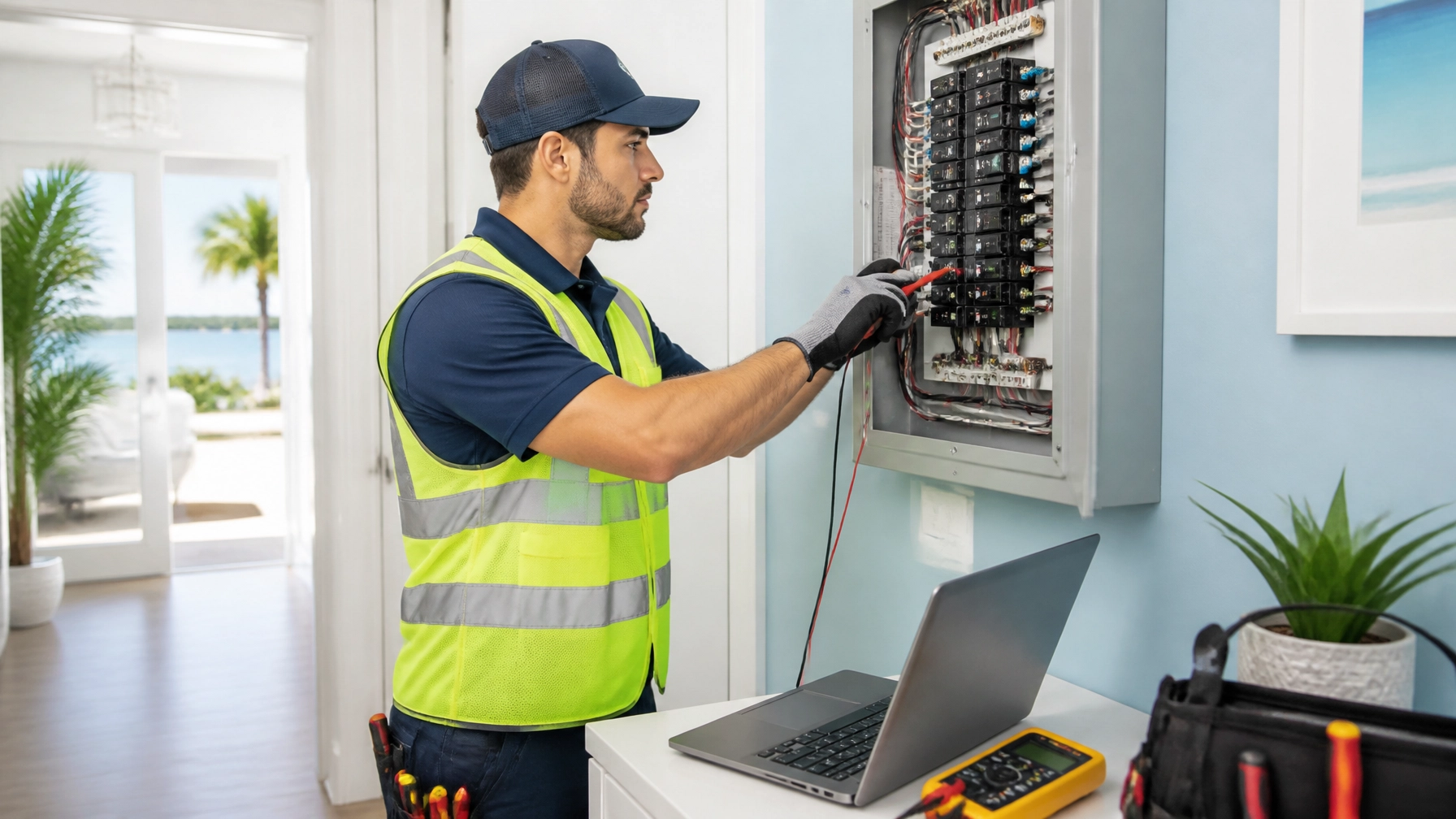
Hi there! If you’re reading this, you’re probably standing in a dark room with a warm fridge or a silent A/C unit, wondering why your power just cut out again. We’ve all been there. You walk over to the panel, flip that little plastic switch, and, click, ten minutes later, you’re right back where you started.
In Florida, a tripping circuit breaker isn’t just a minor annoyance; it’s often a sign that your home’s electrical system is struggling to keep up with the "Sunshine State" lifestyle. Between our high-powered air conditioners running 24/7, the occasional tropical storm surge, and our notorious afternoon lightning strikes, your electrical panel works harder than almost anywhere else in the country.
At Florida Electrical Specialists, we’ve resolved over 12,000 electrical issues across all 67 Florida counties. We know exactly why these breakers keep giving up the ghost. Before you go searching for an "electrician near me," let’s walk through five simple steps to troubleshoot the problem safely.
Why Do Breakers Trip Anyway? (The Short Version)
Think of your circuit breaker as a high-tech security guard. Its only job is to watch the "flow" of electricity. If too much power tries to rush through at once, the wires could overheat and start a fire. To prevent that, the breaker "trips" and cuts the power instantly.
It’s doing exactly what it was designed to do: protecting your family and your home. Usually, it’s caused by one of three things:
- Circuit Overload: Too many things plugged in.
- Short Circuit: A "hot" wire touching a "neutral" wire.
- Ground Fault: A "hot" wire touching a ground wire (or moisture).
Step 1: The "Sniff and Touch" Safety Check
Before you even think about touching the panel, we need to make sure you aren't dealing with an active electrical fire.

Walk over to your electrical panel and use your senses:
- Do you smell anything? If you catch a whiff of ozone, burning plastic, or "fishy" odors, stop. This is a sign of melting insulation or arcing.
- Is it hot? Carefully place the back of your hand near the panel cover. If it feels unusually warm or hot to the touch, do not open it.
- Do you hear anything? Listen for a "sizzling" or "buzzing" sound.
If you notice any of these signs, you likely have a serious wiring issue or a failing bus bar. This is the moment you need an emergency electrician immediately. Don't risk a house fire by trying to DIY a melting panel.
Step 2: The "Load Shed" (Unplug Everything)
If the panel seems cool and quiet, the most likely culprit is an overload. This is extremely common in Florida kitchens and home offices.
Go to the area of the house that lost power. Unplug everything on that circuit.
- Kitchen: Microwaves, air fryers, and coffee makers are the "big three" for overloads.
- Living Room: Space heaters or large entertainment systems.
- Garage: That extra beer fridge or power tools.
Florida Pro Tip: If your breaker trips the second your A/C kicks on, you might be dealing with a "hard start" issue or an undersized circuit. Our A/C units are massive power hogs, and if your home was built more than 20 years ago, your panel might need an electrical panel upgrade to handle the modern cooling demand.
Step 3: The Proper Reset Technique
Many homeowners just try to shove the breaker back to the "ON" position. That won't work. Most breakers have three positions: ON, OFF, and a "middle" tripped position.
- Find the breaker that is out of alignment (it usually has a little red or orange indicator window).
- Flip it all the way to the OFF position first. You should feel a firm click.
- Now, flip it all the way to the ON position.
If the breaker stays on, great! If it "snaps" back to the middle immediately, you have a direct short or a ground fault. Do not keep trying to reset it. Flipping a breaker into a direct short repeatedly can cause the breaker to fail or lead to an explosion called an arc flash.
Step 4: The One-by-One Appliance Test
If the breaker stayed on after you reset it, it’s time to find the "bad apple."
Go back to your room and plug your devices back in one at a time.
- Plug in the lamp. Is it okay?
- Turn on the TV. Still on?
- Now, plug in the toaster. POP!

If the breaker trips the moment you plug in or turn on a specific appliance, you’ve found your problem. It’s either that the appliance is faulty (internal short), or that specific combination of items is drawing more than the 15 or 20 amps the circuit is rated for.
In Florida, we see this a lot with portable A/C units and dehumidifiers. If you find yourself constantly moving plugs around just to keep the lights on, you might want to look into electrical panel replacement vs upgrade options to add a dedicated circuit for those heavy-duty items.
Step 5: Address Florida-Specific Culprits
Sometimes, it’s not your appliances at all: it’s the Florida environment. Here are three things we see every day:
1. Humidity and Outdoor GFCIs
Our humidity is legendary, and so is our rain. If your outdoor outlets (the ones on your lanai or near the pool) aren't properly sealed, moisture can get inside. This causes a "ground fault," and the GFCI breaker will trip to prevent you from getting a shock. Check your GFCI outlet installation and make sure those weatherproof covers are actually closed!
2. Lightning and Power Surges
Florida is the lightning capital of the U.S. A nearby strike can send a "ghost surge" through your lines that weakens your breakers over time. If your breakers trip for "no reason" during a thunderstorm, your home is literally crying out for protection. We highly recommend a whole house surge protector to keep your expensive appliances from getting fried.
3. Outdated Panels (The "Troublemakers")
If your home was built between the 1950s and 1980s, you might have a Federal Pacific or Zinsco panel. These are notorious in the electrical industry because they often fail to trip when they should, or they trip and won't reset. If you see these brand names on your panel door, you should check out our guide on what to look for in outdated panels. These are considered fire hazards by most Florida insurance companies today.
When to Call a Pro
Troubleshooting is great, but electricity is dangerous. You should call a 24 hour electrician if:
- The breaker trips immediately with nothing plugged in.
- You see sparks or smoke.
- The breaker feels "squishy" or won't click into place.
- You have to reset the same breaker more than once a week.

Working with a licensed Florida electrical contractor ensures your home meets the strict Florida Building Code and keeps your family safe. At Florida Electrical Specialists, we offer clear upfront estimates and 24-hour response times, so you aren't left in the dark.
Frequently Asked Questions (FAQ)
Q: Can I just replace the 15-amp breaker with a 20-amp breaker to stop the tripping?
A: Absolutely not! This is one of the most dangerous DIY mistakes. The breaker is sized to protect the wires in your wall. If you put a bigger breaker on thin wires, the wires will catch fire before the breaker ever trips.
Q: Why does my breaker trip only when it rains?
A: This usually points to a ground fault. Check your outdoor light fixtures, pool pumps, or outlets. Moisture is likely getting into a junction box or an outlet that isn't properly sealed.
Q: Is a tripping breaker an emergency?
A: It can be. If it’s your main breaker and you lose all power (including A/C in July!), or if there’s a burning smell, it is a 100% electrical emergency. If it's just one bedroom outlet, it's a "call tomorrow" situation, but don't ignore it: it won't fix itself.
Q: How much does an electrical panel upgrade cost in Florida?
A: It varies based on your home's size and needs. However, upgrading your panel can often lower your homeowners' insurance premiums in Florida, especially if you’re replacing an old, unsafe brand.
Final Thoughts
A tripping breaker is your home’s way of talking to you. Don't ignore it, and definitely don't try to "force" it to stay on. Follow these steps, stay safe, and if the problem persists, we’re here to help.
Whether you need a quick repair or a full electrical panel replacement, Florida Electrical Specialists has the expertise to get your power back on safely and efficiently. We’re contractor and realtor-friendly, and we know Florida code inside and out.
Give us a call today for an upfront estimate! Stay cool out there.

Electrical requirements may vary by jurisdiction. Always consult local authorities or a licensed Florida electrical professional.