



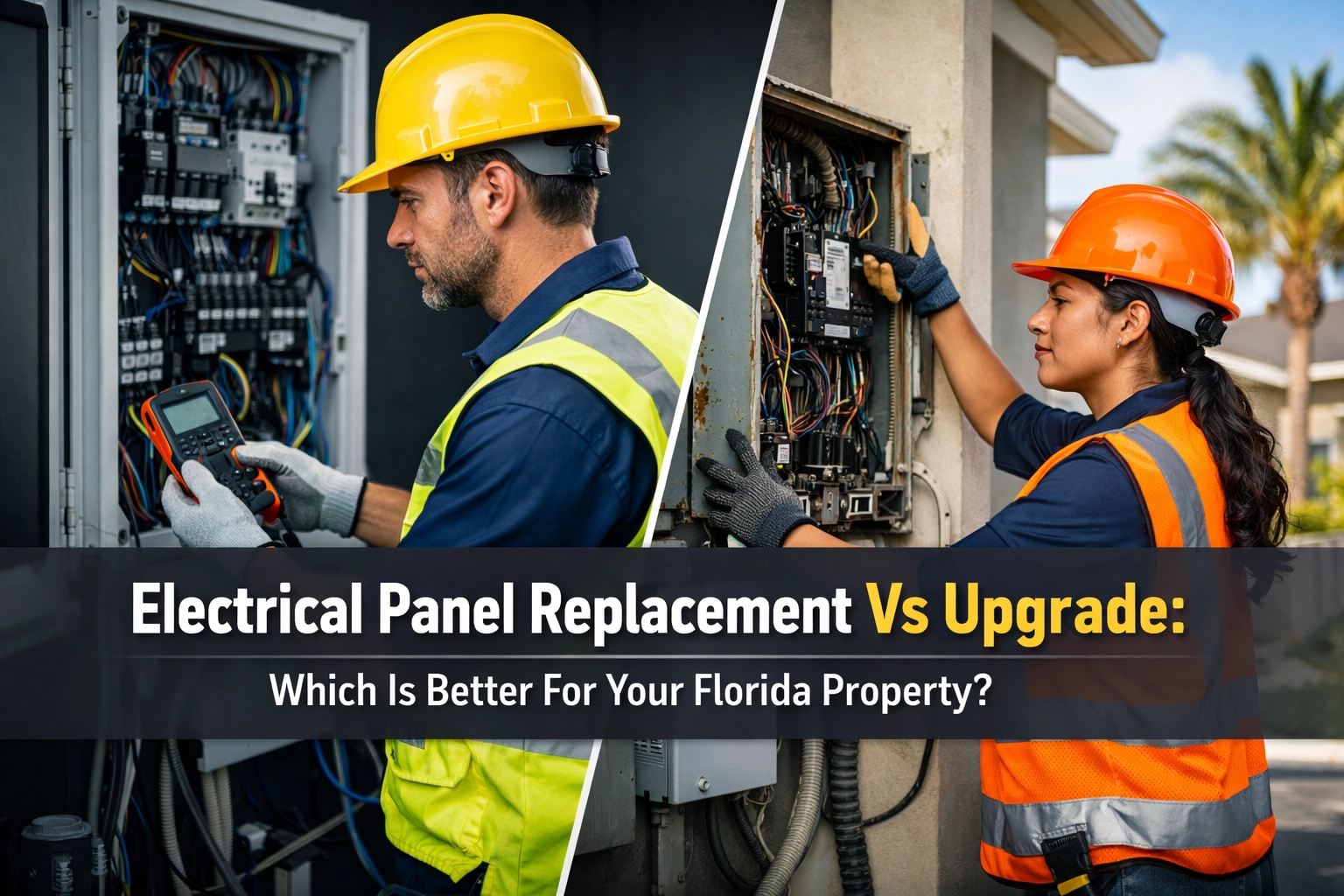
If you live in Florida, you know that our homes work harder than most. Between the relentless humidity, the non-stop hum of the air conditioner, and the occasional tropical storm that sends power surges through the neighborhood, your electrical system is under constant pressure. At the heart of it all is your electrical panel: the "brain" of your home's power.
When things start to go wrong: maybe a circuit breaker keeps tripping or you notice an outlet not working in the kitchen: you start hearing terms like "replacement" and "upgrade." But what’s the real difference? Are they just fancy ways of saying the same thing, or do they serve different purposes for your Florida property?
Whether you're a homeowner trying to keep the lights on, a realtor prepping a house for sale, or a contractor managing a renovation, understanding the nuances between an electrical panel replacement and an upgrade is vital for safety, compliance, and property value.
Replacement vs. Upgrade: What’s the Real Difference?
In the world of electrical services, these terms are often used interchangeably, but they have distinct technical meanings.
What is an Electrical Panel Replacement?
A replacement is typically a "like-for-like" swap. If you have an old 100-amp panel that is corroded, damaged, or belongs to a recalled brand (like Federal Pacific or Zinsco), an electrician might recommend a replacement. You aren't necessarily increasing the amount of power coming into the home; you are simply installing a new, safe, and modern version of what you already have.
What is an Electrical Panel Upgrade?
An upgrade involves increasing the capacity of your electrical service. Most older Florida homes were built with 60-amp or 100-amp service. In 2026, that simply isn't enough for modern life. An upgrade usually means moving from 100 amps to 200 amps (or even 400 amps for larger estates). This allows you to add high-draw appliances like a new HVAC system, a pool heater, or an EV charger installation.
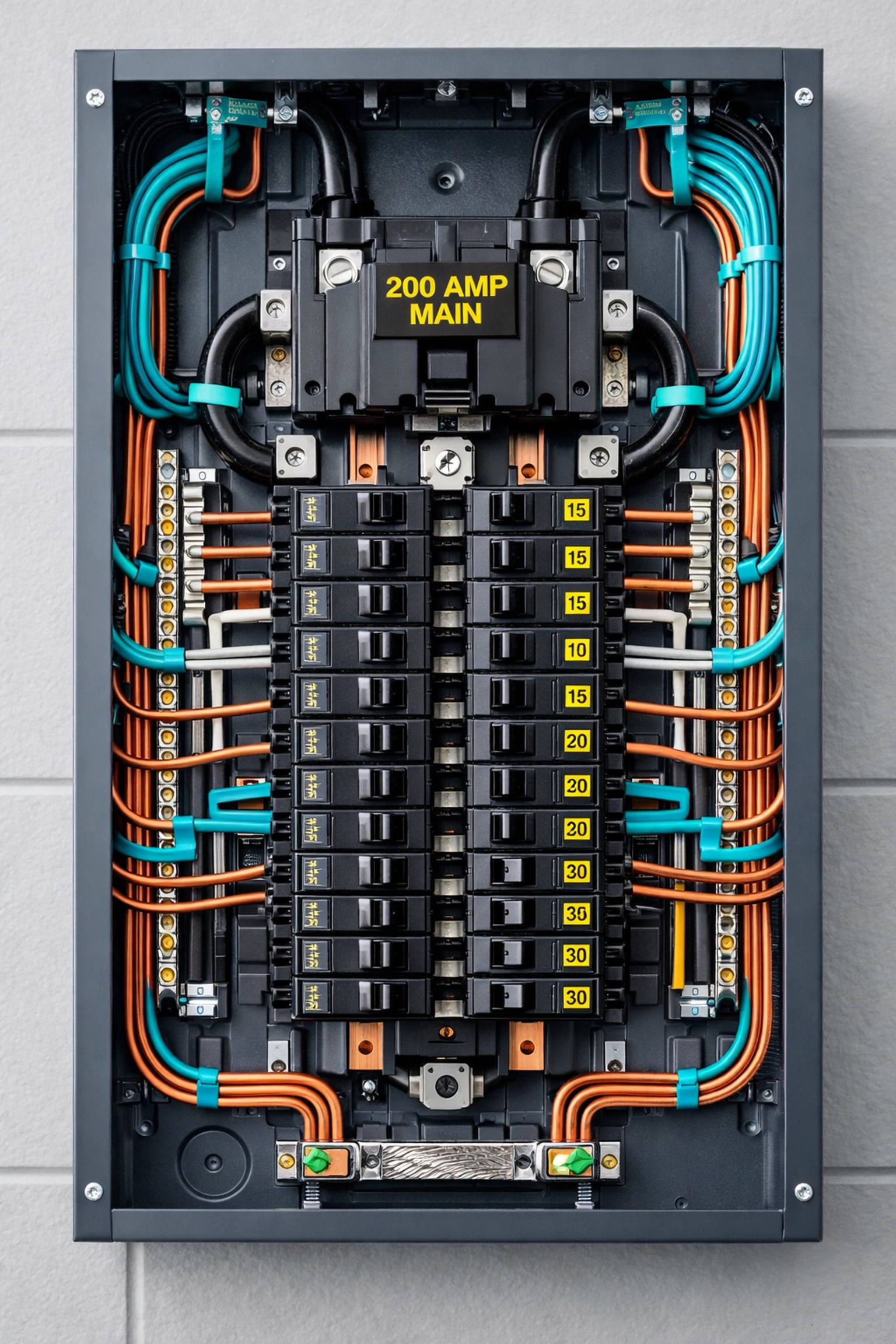
5 Signs Your Florida Home Needs Immediate Attention
Before deciding which path to take, you need to know if your current system is failing. Here are the red flags we see most often across Alachua County and the surrounding areas:
- The Breakers Won't Stay Set: If a circuit breaker keeps tripping every time you run the microwave and the hair dryer at the same time, your panel is struggling to manage the load.
- Discolored Outlets: If you see "burnt" marks on your wall plates or find an outlet not working despite the breaker being on, there could be a serious connection issue inside your panel.
- Physical Damage or Corrosion: Florida's salt air and humidity can lead to rust inside the panel box. Rust creates resistance, resistance creates heat, and heat creates fires.
- Flickering Lights: When the AC kicks on, do your lights dim for a second? That’s a sign that your system is overtaxed.
- The "Old Brand" Factor: If your panel says Federal Pacific, Zinsco, or Sylvania/Challenger, it’s not a matter of if you should replace it, but when. These brands have high failure rates and are often uninsurable in Florida.
For a deeper dive into these warning signs, check out our guide on is your electrical panel outdated.
Why Florida Homeowners Specifically Need Upgrades
Florida presents a unique set of challenges for electrical systems. We aren't just dealing with standard wear and tear; we are dealing with environmental factors that demand a robust electrical backbone.
The Hurricane Factor
During storm season, our grid takes a beating. A modern, upgraded panel is much better equipped to handle the fluctuations in power that occur during heavy storms. Furthermore, if you are planning to install a whole-house standby generator to survive the next hurricane season, an electrical panel upgrade is almost always a prerequisite to ensure the transfer switch can handle the load.
Whole House Surge Protection
With Florida being the "Lightning Capital of the US," a whole house surge protector is no longer a luxury: it’s a necessity. Newer panels are designed to integrate these protectors directly into the bus bar, providing superior protection compared to the "plug-in" strips you buy at big-box stores. You can learn more about how to future-proof your home with surge protection and EV chargers on our blog.
Modern Power Demands (EVs and Smart Homes)
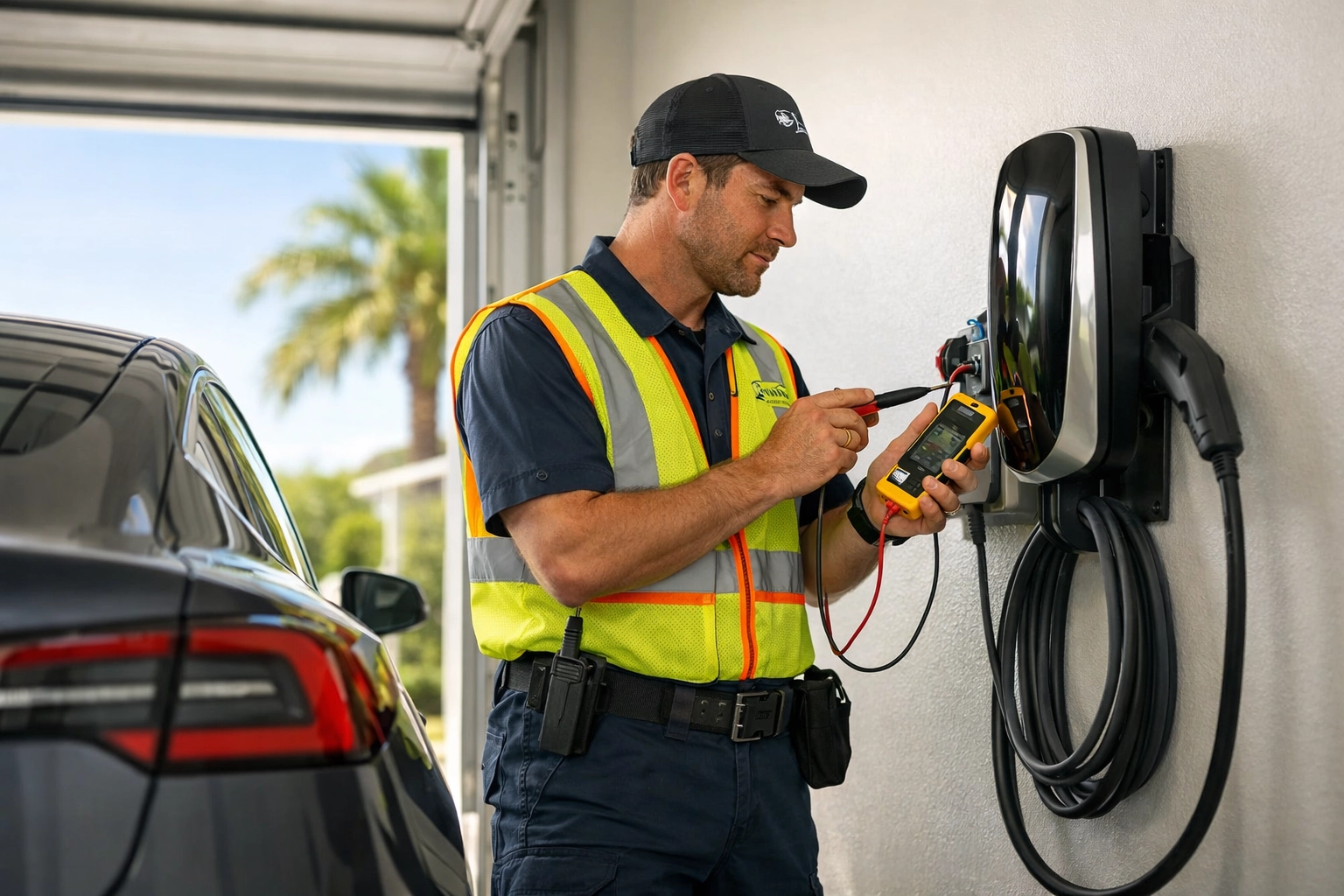
Are you looking into an EV charger installation? Most Level 2 chargers require a dedicated 40-amp to 60-amp circuit. If your total home capacity is only 100 amps, adding a charger could push you over the limit. Upgrading to a 200-amp panel ensures you can charge your car while running the AC and the dishwasher without a second thought.
The Professional Perspective: For Realtors and Contractors
If you are a realtor or a contractor in Florida, the electrical panel is often a "make or break" item during an inspection.
For Realtors:
An outdated or underpowered panel can tank a deal. Many Florida insurance companies will refuse to write a policy for a home with a 60-amp service or a recalled panel brand. Advising your sellers to perform an electrical panel replacement before listing can lead to a much smoother closing and a higher valuation. We have detailed what every Florida contractor and realtor needs to know about this specific topic.
For Contractors:
When pulling permits for a kitchen remodel or an addition, the Florida Building Code may require you to bring the entire electrical system up to current standards. This often means adding GFCI outlet installation in wet areas and potentially upgrading the main service panel to accommodate the new square footage.
Cost Considerations in Florida
We get asked this all the time: "Justin, how much is this going to set me back?"
While every property is different, a standard electrical panel replacement or upgrade in Florida typically ranges from $2,000 to $4,500.
Why the price range? Several factors come into play:
- Amperage: Moving to 200 amps costs more in materials and utility fees than staying at 100 amps.
- Location: If your panel is currently in a closet (which is no longer code-compliant), we have to move it to an exterior wall or a more accessible area.
- Grounding: Modern codes require specific grounding rods that older homes simply don't have.
- Permitting: Every municipality in Florida has different permit fees and inspection requirements.
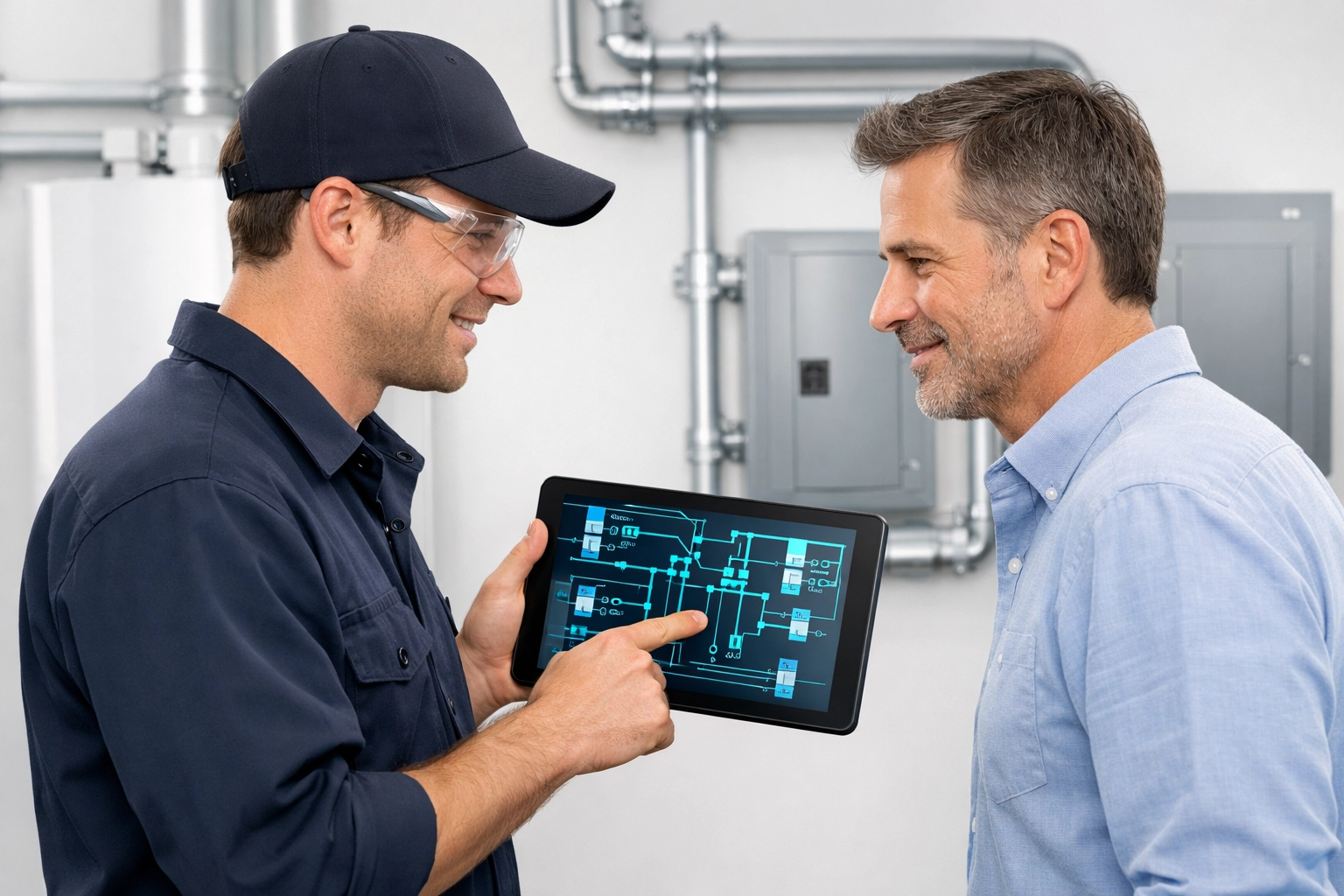
At Florida Electrical Specialists, we believe in transparency. When you search for an "electrician near me," you want someone who provides a clear, itemized quote that includes the permit and the final inspection.
DIY vs. Hiring a Professional
It can be tempting to try and swap a breaker yourself or watch a YouTube video on panel wiring. In Florida, this is not just dangerous: it’s often illegal.
Electrical work requires permits from your local building department. If you do the work yourself and a fire occurs, your insurance company will likely deny the claim because the work wasn't performed by a licensed professional and inspected by the city or county.
Furthermore, handling the "service entrance" wires: the ones coming from the utility pole: is extremely hazardous. There is no "off switch" for those wires until the utility company disconnects them at the street. If you have an electrical emergency, you should always call a 24 hour electrician rather than risking your life.
Compliance and Safety Standards for 2026
As of 2026, Florida follows strict adherence to the National Electrical Code (NEC). Key requirements for a new panel include:
- AFCI Breakers: Arc-Fault Circuit Interrupters are now required for almost all living areas to prevent house fires caused by small sparks.
- GFCI Protection: GFCI outlet installation or GFCI breakers are mandatory for kitchens, bathrooms, garages, and outdoor areas.
- Outdoor Disconnects: Recent codes require an emergency disconnect on the outside of the home so first responders can cut power quickly in the event of a fire.
For more information on keeping your property up to date, review our essential home electrical safety checklist for 2026.
Final Verdict: Which Is Better?
So, back to the big question: Which is better for your Florida property?
- Choose Replacement if your current amperage (100 or 150) meets all your needs, but your hardware is old, damaged, or a safety hazard. It’s a cost-effective way to stay safe and insurable.
- Choose Upgrade if you are planning for the future. If you want an EV, a hot tub, a new high-efficiency HVAC, or simply want to increase your home's resale value, a 200-amp upgrade is the gold standard.
How Florida Electrical Specialists Can Help
Navigating the world of permits, utility companies, and circuit loads can be a headache. That’s where we come in. Florida Electrical Specialists helps property owners across the state navigate the complexities of their electrical systems. From electrical services in Alachua County to emergency repairs, our team is dedicated to keeping your home or business powered safely.
If you’re tired of that one circuit breaker keeps tripping or you’re ready to pull the trigger on that EV charger installation, don't wait until it becomes an emergency.
Working with a licensed Florida electrical contractor can help ensure code compliance and avoid costly inspection failures. Contact Florida Electrical Specialists today for a comprehensive evaluation of your panel. We’ll help you decide whether a replacement or an upgrade is the right move for your specific needs and budget.
Note: Electrical requirements may vary by jurisdiction. Always consult local authorities or a licensed Florida electrical professional before beginning any major electrical project.