



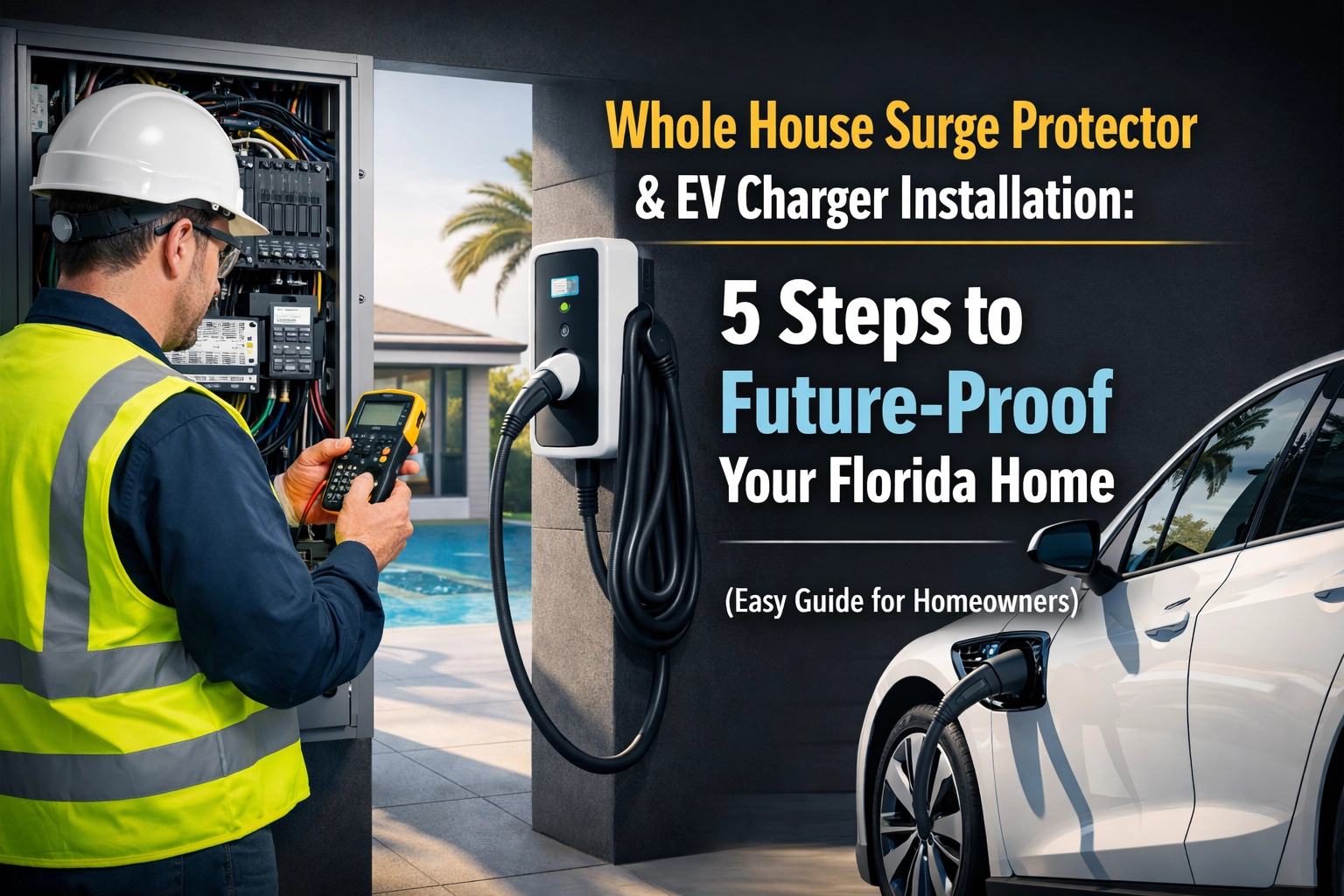
Florida isn't just the Sunshine State: it's also the Lightning Strike Capital of the U.S. If you're planning to install an EV charger at your home, protecting that investment (and your entire electrical system) with a whole-house surge protector isn't optional. It's essential.
Here's the thing: your new electric vehicle has thousands of dollars worth of sensitive electronics built into it. Your EV charger? Same deal. One lightning strike or major voltage spike can fry both, along with your panel, appliances, and anything else plugged into your home. In Florida, where afternoon thunderstorms roll through like clockwork from June through September, surge protection is a no-brainer.
This guide walks you through the five key steps to install both systems the right way: so you can charge your EV safely and protect your home from Florida's wildest electrical threats.
Step 1: Understand What Type of Surge Protection Your Florida Home Actually Needs
Not all surge protectors are created equal. If you're serious about protecting your home and EV charger, you need to understand the difference between Type 1 and Type 2 surge protection devices (SPDs).
Type 1 SPDs install at your main service entrance: right where power enters your home from the utility company. These are designed to handle massive external surges, like direct or nearby lightning strikes. In Florida, where lightning activity is among the highest in the nation, Type 1 protection is often recommended for homes in high-risk areas.
Type 2 SPDs install at your electrical panel or sub-panels inside your home. They're the most common choice for residential surge protection and handle everyday voltage spikes caused by utility fluctuations, large appliances turning on and off, or indirect lightning strikes.
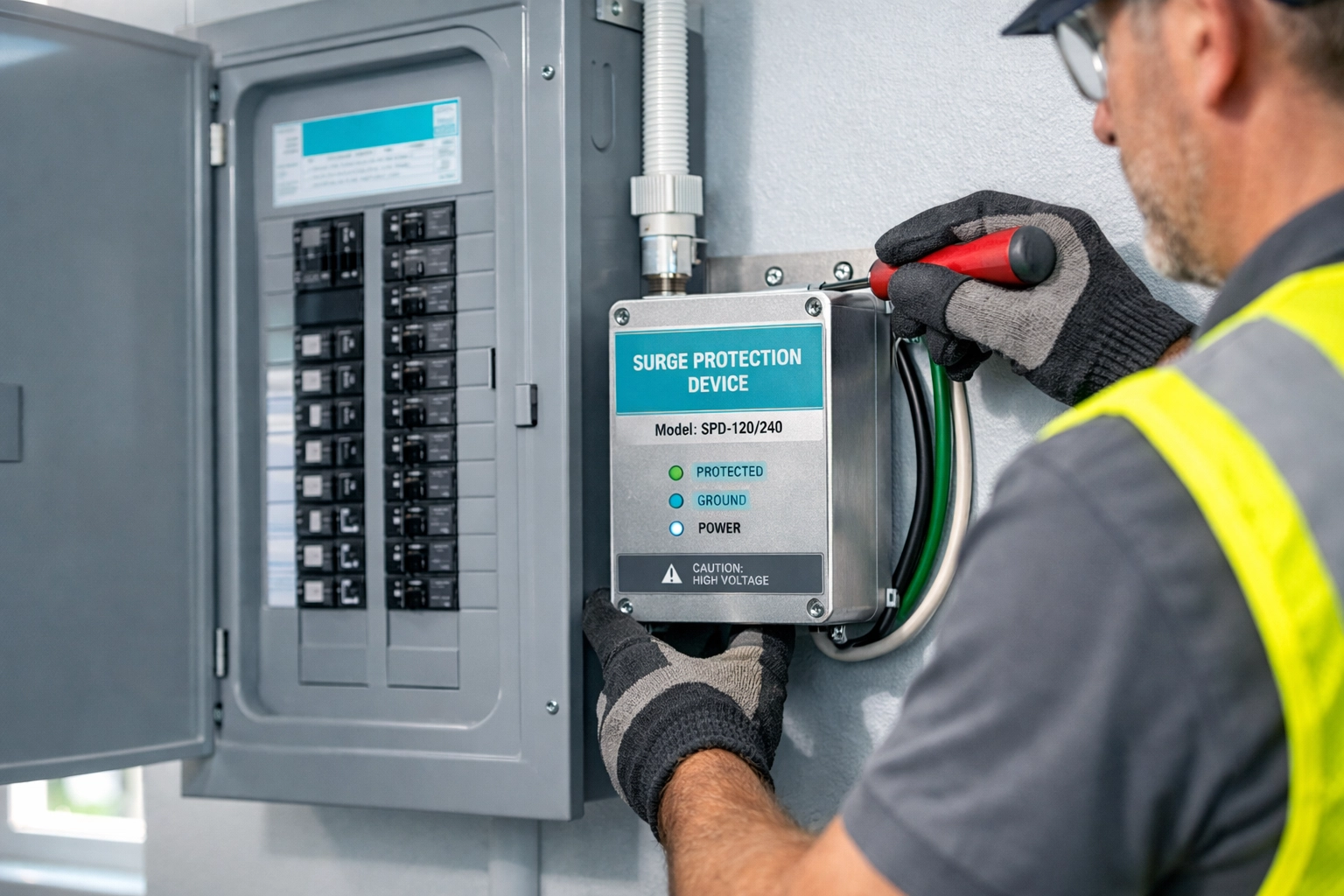
For most Florida homeowners installing an EV charger, a Type 2 whole-house SPD is the baseline recommendation. If you live in a rural area with overhead power lines or frequent storm activity, you might want to consider Type 1 protection: or both.
Here's what you need to check before buying anything:
- Your local building codes: Some Florida counties now require surge protection for new electrical work or upgrades. Always verify with your jurisdiction.
- Your panel's capacity: Whole-house SPDs need a dedicated breaker slot. If your panel is already maxed out, you may need an upgrade before installation.
- Compatibility with your existing system: SPDs must match your home's voltage (typically 120/240V for residential).
Pro tip: If you're upgrading your electrical panel to support an EV charger anyway, that's the perfect time to add whole-house surge protection. You're already paying for the labor: might as well knock out both projects at once.
Step 2: Check Your Panel Capacity (and Budget for an Upgrade If Needed)
Before you install anything, you need to know whether your electrical panel can handle the load. Most Level 2 EV chargers require a dedicated 40–60 amp circuit, which is a significant draw on your home's electrical system.
Here's the reality: many Florida homes: especially older ones built before 2000: have 100-amp or 150-amp panels. If you're running central AC, a water heater, appliances, and now adding an EV charger, you're likely pushing your panel to its limit.
Signs your panel needs an upgrade:
- Your panel is already full (no available breaker slots)
- You experience frequent breaker trips when multiple appliances run
- Your home has a fuse box instead of a modern breaker panel
- Your panel is rated for less than 200 amps
A licensed electrical contractor can perform a load calculation to determine whether your existing panel can safely support an EV charger and surge protector. If not, upgrading to a 200-amp panel is the right move: and it's a smart investment that increases your home's value and electrical safety.
What a panel upgrade costs in Florida: Expect to pay between $1,500 and $3,500 depending on your home's configuration, whether you need a meter upgrade, and local permitting requirements. It's not cheap, but it's non-negotiable if your panel can't handle the load.
Step 3: Install the Whole-House Surge Protection Device First
Once you've confirmed your panel can handle everything, the next step is installing the whole-house SPD. This should happen before your EV charger goes in, so both systems are protected from day one.
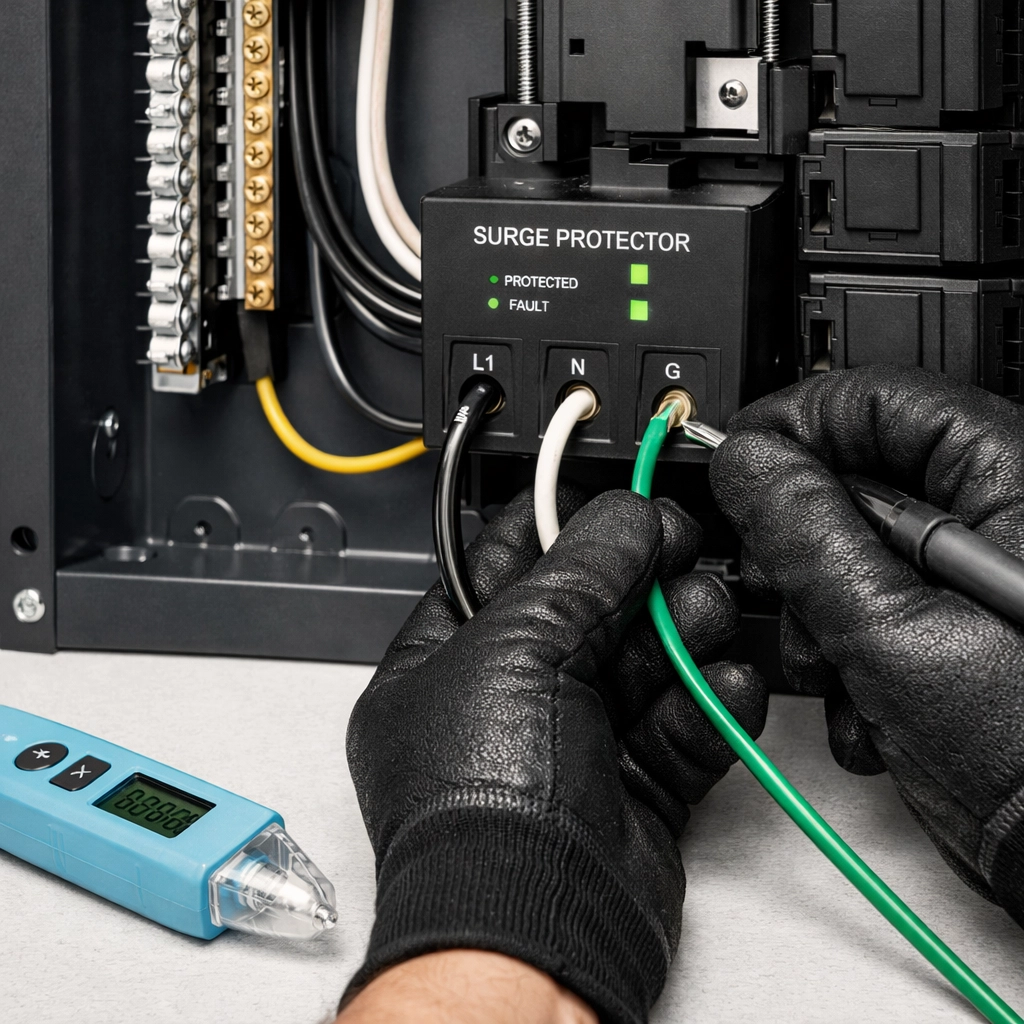
Here's the basic process (performed by a licensed electrician):
- Turn off the main breaker and verify the panel is de-energized using a voltage tester.
- Mount the SPD near your main panel. The closer, the better: short, direct wiring is critical for effective surge protection.
- Connect the wiring:
- Hot wire to a dedicated SPD breaker terminal
- Neutral wire to the neutral bus bar
- Ground wire to the grounding bus
- Secure the device and tighten all terminals firmly.
- Restore power and check the indicator light. Green means you're protected. Red or no light means something's wrong.
Important Florida-specific note: Some SPDs are designed specifically for high-lightning areas and include higher joule ratings or additional response features. If you live in Central Florida or anywhere with frequent afternoon storms, ask your electrician about SPDs rated for 80kA or higher.
Most SPDs also include a visual indicator light that shows the device is working. Check this monthly: it's the easiest way to confirm your protection is still active.
Step 4: Install Your EV Charger with Proper Grounding and Dedicated Circuit
Now that your home is protected, it's time to install the EV charger. But here's something most homeowners don't realize: installing an EV charger isn't just about running a 240V outlet to your garage. Florida electrical code has specific requirements for EV charging equipment, including:
- Dedicated circuit: Your EV charger must be on its own circuit: no sharing with other devices.
- GFCI protection: Ground fault circuit interrupter (GFCI) protection is required for most EV charger installations to prevent shock hazards.
- Proper grounding: Your charger must be grounded correctly to protect against electrical faults and surges.
- Weatherproofing (if outdoor): If your charger is mounted outside, it needs a weatherproof enclosure rated for Florida's humidity and rain.
Your electrician will also need to pull a permit for the installation, and the work will be inspected by your local building department. This isn't red tape: it's safety. A properly permitted and inspected EV charger installation ensures everything meets code and won't create a fire or shock hazard.
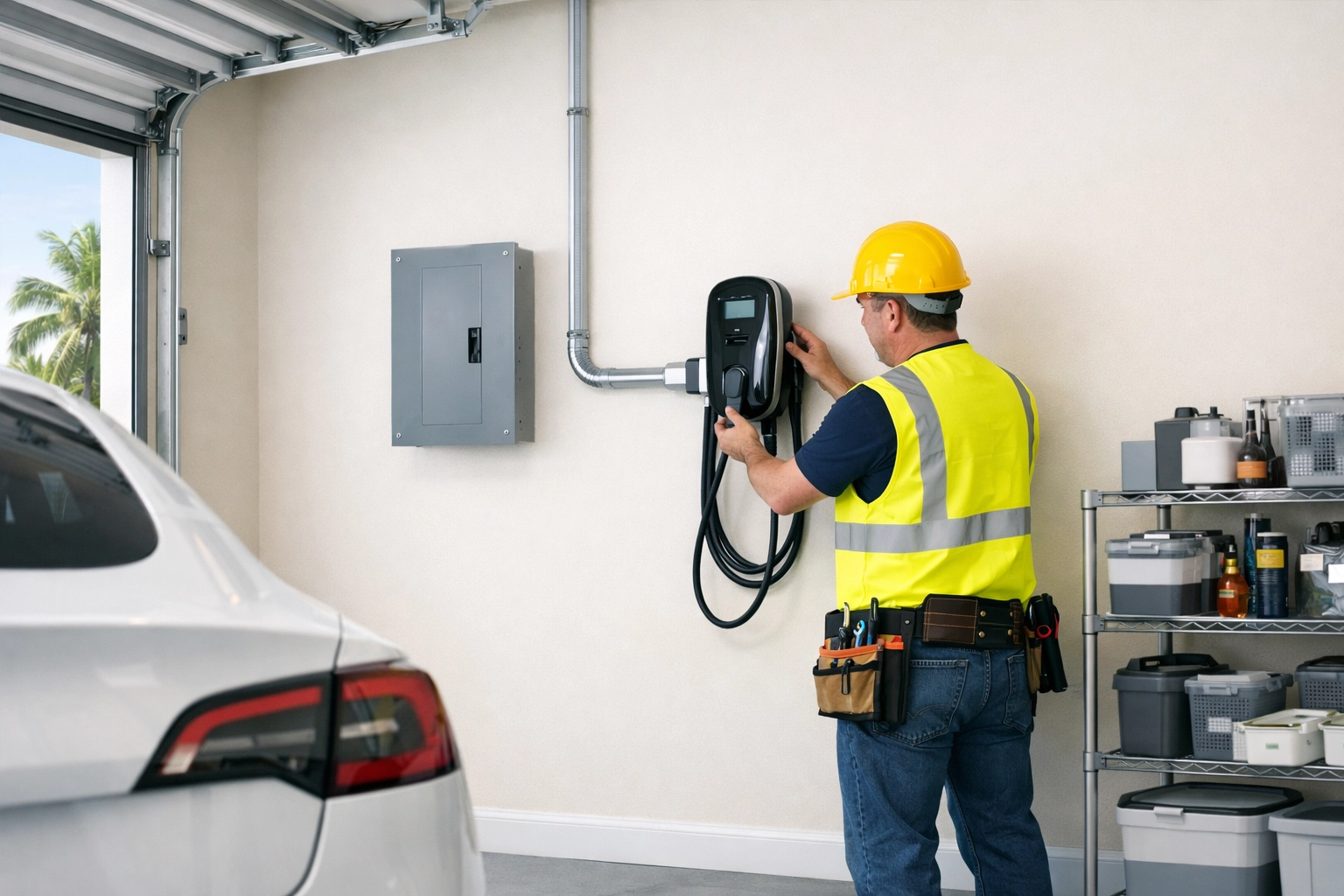
How long does installation take? For most homes with sufficient panel capacity and a clear path from the panel to the garage, expect installation to take 4–6 hours. If you're upgrading your panel at the same time, plan for a full day or more.
Cost for EV charger installation in Florida: Depending on the charger model, wire run distance, and whether you need a panel upgrade, total costs typically range from $1,200 to $3,000. You may also qualify for federal or state incentives that offset some of the expense.
Step 5: Test, Maintain, and Monitor Both Systems Regularly
Congratulations: your home is now future-proofed with whole-house surge protection and a Level 2 EV charger. But you're not done yet. Both systems need regular monitoring to ensure they're working correctly.
For your whole-house SPD:
- Check the indicator light monthly. Green means you're protected. Red or no light means the SPD has failed and needs replacement.
- Test with a multimeter annually. Your electrician can verify the SPD is still providing protection.
- Plan for replacement every 5–10 years. SPDs don't last forever. Even if the indicator light is green, internal components can degrade over time, especially in Florida's humid climate.
For your EV charger:
- Inspect the cable and connector regularly. Look for cracks, fraying, or damage.
- Keep the charger clean and dry. Wipe down the unit and check that outdoor enclosures are sealed.
- Monitor charging speed. If your EV suddenly takes longer to charge, there may be an issue with the charger or circuit.
One critical thing to understand: a failed SPD may look perfectly fine from the outside, but it's providing zero protection. That's why regular testing is essential: especially in Florida, where surge events are frequent.
If your home experiences a direct or nearby lightning strike, have your SPD inspected immediately. Even if it appears to be working, internal damage may have occurred.
Why Florida Homeowners Should Install Both Systems Together
Here's the bottom line: if you're installing an EV charger in Florida, adding whole-house surge protection at the same time is one of the smartest electrical upgrades you can make.
You're already paying for the electrician's time, the permit, and the inspection. Adding surge protection increases your upfront cost by a few hundred dollars: but it protects tens of thousands of dollars worth of equipment and electronics in your home.
Plus, many insurance companies offer discounts for homes with whole-house surge protection. Check with your provider to see if you qualify.
Electrical requirements may vary by jurisdiction. Always consult your local building department or work with a licensed Florida electrical professional to ensure compliance with current codes.
Working with licensed electrical contractors in Florida ensures your installation is done safely, meets all code requirements, and passes inspection the first time. Florida Electrical Specialists helps homeowners across the state navigate permits, panel upgrades, and code-compliant installations: so you can charge your EV with confidence and protect your home from Florida's most unpredictable electrical threats.