



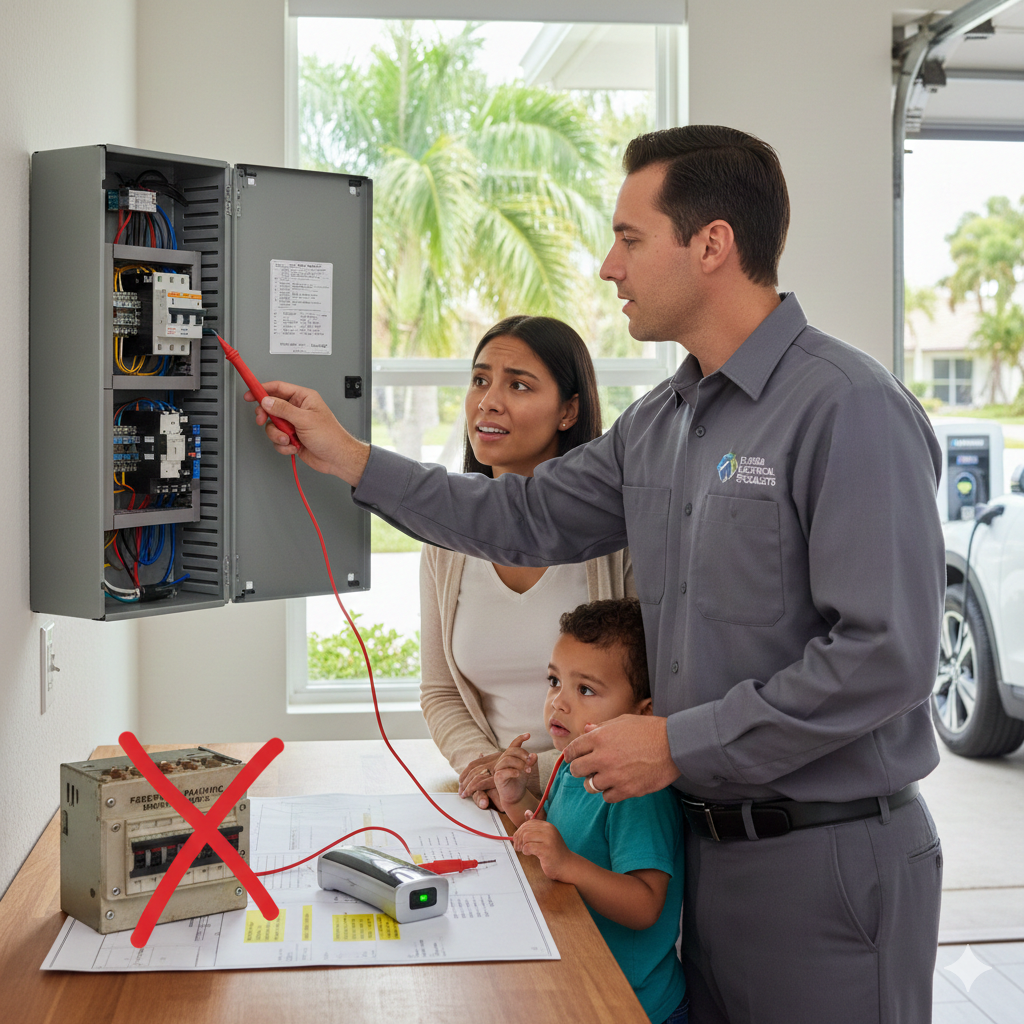
In the modern Florida home, electricity is the invisible backbone of daily life. It powers our air conditioning during sweltering July afternoons, keeps our food fresh, and charges the devices that connect us to the world. However, because electricity is so integrated into our routine, it is often easy to take for granted—until something goes wrong.
At Florida Electrical Specialists (FES), we believe that electrical safety is the cornerstone of a happy home. Protecting your family starts with understanding when a flickering light is a minor nuisance and when it is a warning sign of a potential fire hazard. This comprehensive guide explores the importance of professional electrical project management, how to recognize aging systems, and why hiring a licensed expert is essential for navigating Florida’s unique climate challenges.
The Importance of Expert Electrical Project Management
Many homeowners view electrical work as a series of quick fixes. In reality, significant upgrades—such as a whole-home rewire or a commercial electrical build-out—require meticulous project management.
Expert project management ensures that your home’s electrical infrastructure is handled with precision. When you work with a professional team like FES, you benefit from:
- Code Compliance: Florida’s building codes are some of the strictest in the nation due to our proximity to the coast and high lightning strike frequency. We ensure every project adheres to the National Electrical Code (NEC) and local Florida statutes.
- Cost Mitigation: Proper planning prevents the “domino effect” of electrical failures. By identifying the root cause of an issue early, we help you avoid the unexpected costs of emergency repairs down the road.
- Safety and Reliability: Professional management minimizes the risk of arc flashes, electrical fires, and power failures, ensuring your family remains safe during peak usage or severe weather.
Recognizing the Signs of an Outdated Electrical System
Your home often “talks” to you before a major failure occurs. Learning to listen to these signs can save you thousands of dollars and protect your loved ones.
1. Frequent Circuit Breaker Trips
Breakers are designed to trip when a circuit is overloaded. However, if you find yourself constantly resetting the same breaker, it’s a sign that your electrical panel is struggling to keep up with your modern lifestyle.
2. Flickering or Dimming Lights
If your lights dim when the refrigerator or AC kicks on, your system likely lacks the capacity to handle large appliance loads. This is a common issue in older Florida homes that were built before the era of high-efficiency HVAC units and multiple home computers.
3. Discolored or Warm Outlets
If an outlet cover feels warm to the touch or shows brown/black “scorch” marks, stop using it immediately. This indicates dangerous arcing or overheating behind the wall.
4. The Presence of Aluminum Wiring or Federal Pacific Panels
Homes built between the 1960s and 1970s may have aluminum wiring, which is prone to loosening and causing fires. Additionally, certain brands of panels, such as Federal Pacific Electric (FPE) or Zinsco, are notorious for failing to trip during a surge, creating a massive fire risk. If you have one of these, a panel upgrade is not just a recommendation—it’s a necessity.
Actionable Tips for Homeowners: Best Practices and Upgrades
Navigating electrical upgrades can feel overwhelming. Here is a roadmap to help you make informed decisions for your home.
Understanding the Timeline for Major Upgrades
A full home rewiring is a significant undertaking. Typically, for a standard 2,000-square-foot home, a complete rewire can take 5 to 10 days. During this time, power may be disconnected periodically. When planning such a project, clear communication with your contractor is vital to ensure your family’s schedule isn’t unnecessarily disrupted.
Choosing the Right Fixtures and Surge Protectors
In the “Lightning Capital of the U.S.,” standard power strips aren’t enough. We highly recommend installing Whole-Home Surge Protection. These devices are installed directly at your main panel and protect everything from your $3,000 refrigerator to your smart TV from external power surges and lightning strikes.
Preparing for the Future: EV Chargers
As more Floridians transition to electric vehicles, the demand for home charging stations is skyrocketing. Installing a Level 2 EV charger requires a dedicated 240-volt circuit. Attempting this as a DIY project can result in overloaded circuits or improper grounding. Always consult a licensed electrician to ensure your home’s load calculation can support the new charger.
Scheduling Maintenance Audits
Think of an electrical inspection like a physical for your home. We recommend a professional safety audit every 3–5 years, or annually if you live in an older home. Our technicians check for loose connections, outdated grounding, and wear and tear caused by Florida’s high humidity and salt air.
Florida Building Codes and Tropical Climate Challenges
Florida’s environment is uniquely harsh on electrical components. High humidity leads to corrosion, and tropical storms bring the threat of flooding and power surges.
The National Electrical Code (NEC) and the Florida Building Code have specific requirements for coastal areas. For instance, outdoor receptacles must be weather-resistant (WR) and utilize “In-Use” covers that protect the outlet even when something is plugged in. Furthermore, the NEC requires GFCI (Ground Fault Circuit Interrupter) protection in all areas where moisture is present—kitchens, bathrooms, garages, and outdoor spaces.
At FES, we specialize in “storm-proofing” your electrical system, ensuring that your panels and outdoor wiring are rated to withstand the elements.
Case Study: The Danger of the “DIY” Panel Upgrade
We recently assisted a homeowner in the Tampa area who attempted to “modernize” their own electrical panel after watching online tutorials. They had installed several new breakers but failed to properly torque the connections and overlooked a corroded neutral bus bar.
Within a week, the homeowner noticed a burning smell. Upon inspection, we found that the loose connections had caused significant heat buildup, melting the insulation on the main service wires. This could have easily resulted in a structure fire.
The Lesson: While DIY projects are great for painting or landscaping, electrical work involves high-voltage systems that require specialized tools and years of training. Saving a few dollars on labor is never worth the risk of losing your home.
Who We Are: Florida Electrical Specialists (FES)
Florida Electrical Specialists is more than just a service provider; we are your neighbors. With years of experience serving both residential and commercial clients across Florida, our mission is to provide high-quality, safe, and efficient electrical solutions.
Our team consists of fully licensed and insured master and journeyman electricians who stay up-to-date with the latest industry standards and technologies. We pride ourselves on transparent pricing, punctual service, and a commitment to getting the job done right the first time.
Our Core Services
- Residential Services: From ceiling fan installations to complete home rewiring.
- Commercial Electrical: Comprehensive build-outs, tenant improvements, and maintenance.
- Emergency Repairs: Electrical issues don’t happen on a schedule. We offer emergency services to keep your home safe 24/7.
- Panel Upgrades & Replacements: Modernizing your electrical heart for better safety and capacity.
- Lighting Design: Enhancing your home’s aesthetic and energy efficiency with LED conversions.
- Surge Protection: Protecting your electronics from Florida’s frequent lightning strikes.
Managing Costs with Financing Options
We understand that major electrical repairs or upgrades can be an unexpected financial burden. To help our clients prioritize safety without stress, FES offers flexible financing options. We believe every family deserves a safe home, and we work with you to find a payment plan that fits your budget.
Communicating with Your Technical Team
When you call an electrician, being prepared can help the technician diagnose the problem faster. Use these tips to communicate effectively:
- Be Specific: Instead of saying “the power is acting weird,” say “the lights in the kitchen flicker whenever the microwave starts.”
- Note the History: If the issue started after a recent storm or after a new appliance was installed, let us know.
- Check the Breaker: Note if a specific breaker has tripped and if it stays reset or flips back immediately.
Related Posts
- The Essential Home Electrical Safety Checklist 2026
- Are You Making These Common Electrical Panel Upgrade Mistakes in Florida?
- Whole House Surge Protector and EV Charger Installation: 5 Steps to Future-Proof Your Florida Home (Easy Guide for Homeowners)
Summary: Protecting Your Legacy
Electrical safety isn’t just about preventing a blown fuse; it’s about protecting your family, your property, and your peace of mind. By recognizing the signs of an aging system, adhering to Florida’s strict building codes, and partnering with a licensed professional like Florida Electrical Specialists, you ensure that your home remains a safe haven for years to come.
At Florida Electrical Specialists, we specialize in powering your vision with precision and safety. From high-end custom lighting designs to premium electrical upgrades, our expert team is dedicated to delivering exceptional craftsmanship and unmatched reliability in every project. Don’t settle for ordinary electrical work when your home or business deserves extraordinary care and professional expertise.
For consultations or to secure your property’s electrical future today, contact us at Florida Electrical Specialists!