



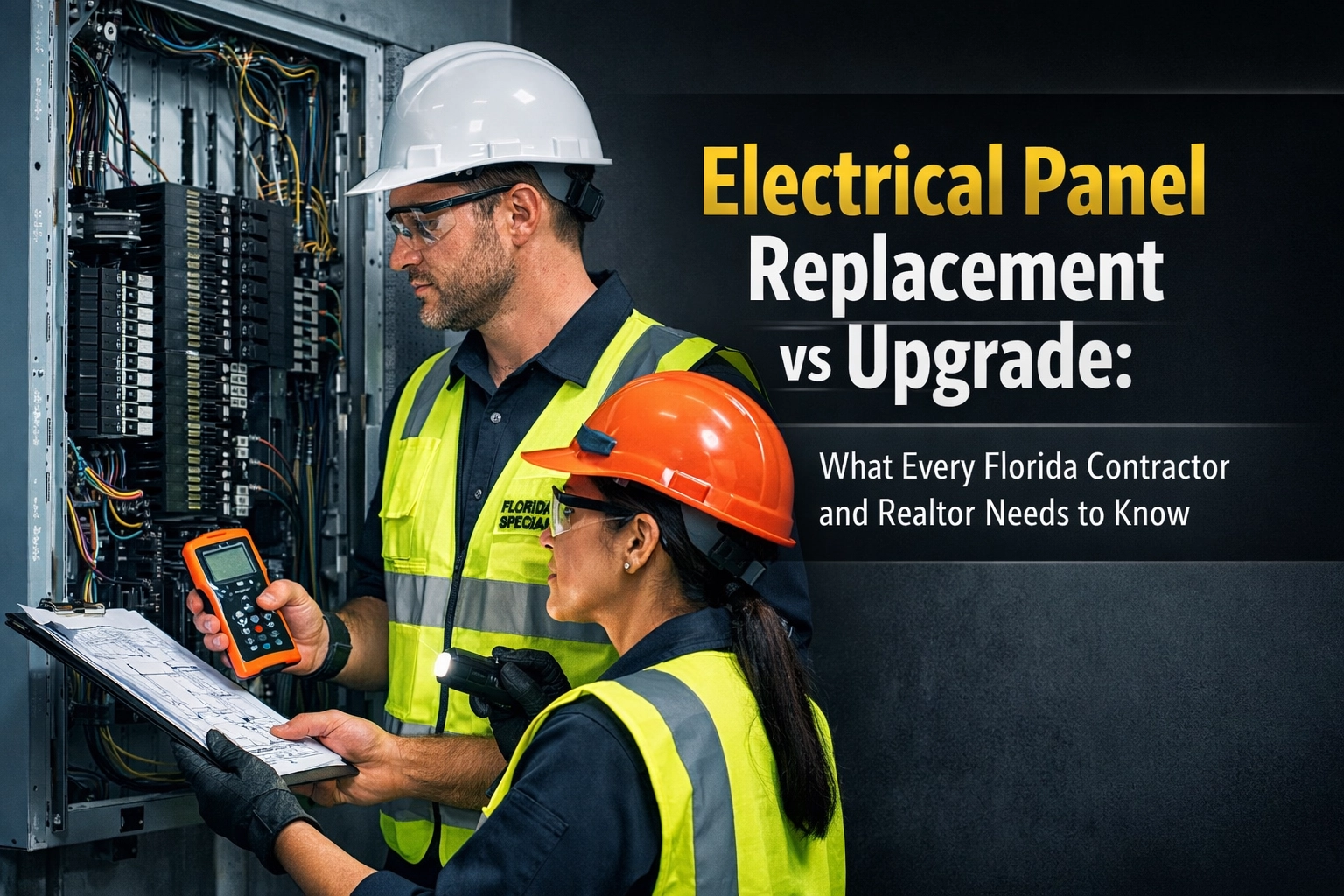
If you're a contractor or realtor working in Florida, you've probably fielded more than a few questions about electrical panels. Your clients are confused: and honestly, they should be. The terminology gets tossed around like it's all the same thing, but here's the reality: panel replacement and panel upgrade are not interchangeable terms, and knowing the difference can save your clients thousands of dollars, keep deals from falling through, and potentially prevent serious safety hazards.
Let's break down what you actually need to know when guiding Florida homeowners, buyers, and property investors through electrical panel decisions.
What's the Real Difference Between Replacement and Upgrade?
Here's where most people get tripped up. An electrical panel replacement means you're ripping out the old panel entirely and installing a brand-new system: usually a 200-amp service with modern circuit breakers, updated wiring connections, and full code compliance. Think of it as a complete teardown and rebuild.
An electrical panel upgrade, on the other hand, can mean a few different things. It might involve increasing the amperage capacity from 100 to 200 amps, swapping out outdated breakers, modernizing the panel without replacing the entire enclosure, or adding circuits to accommodate new appliances like EV chargers or pool equipment.
The key difference? Scope and necessity. Replacement is a full system overhaul. Upgrade is targeted capacity or safety improvement.
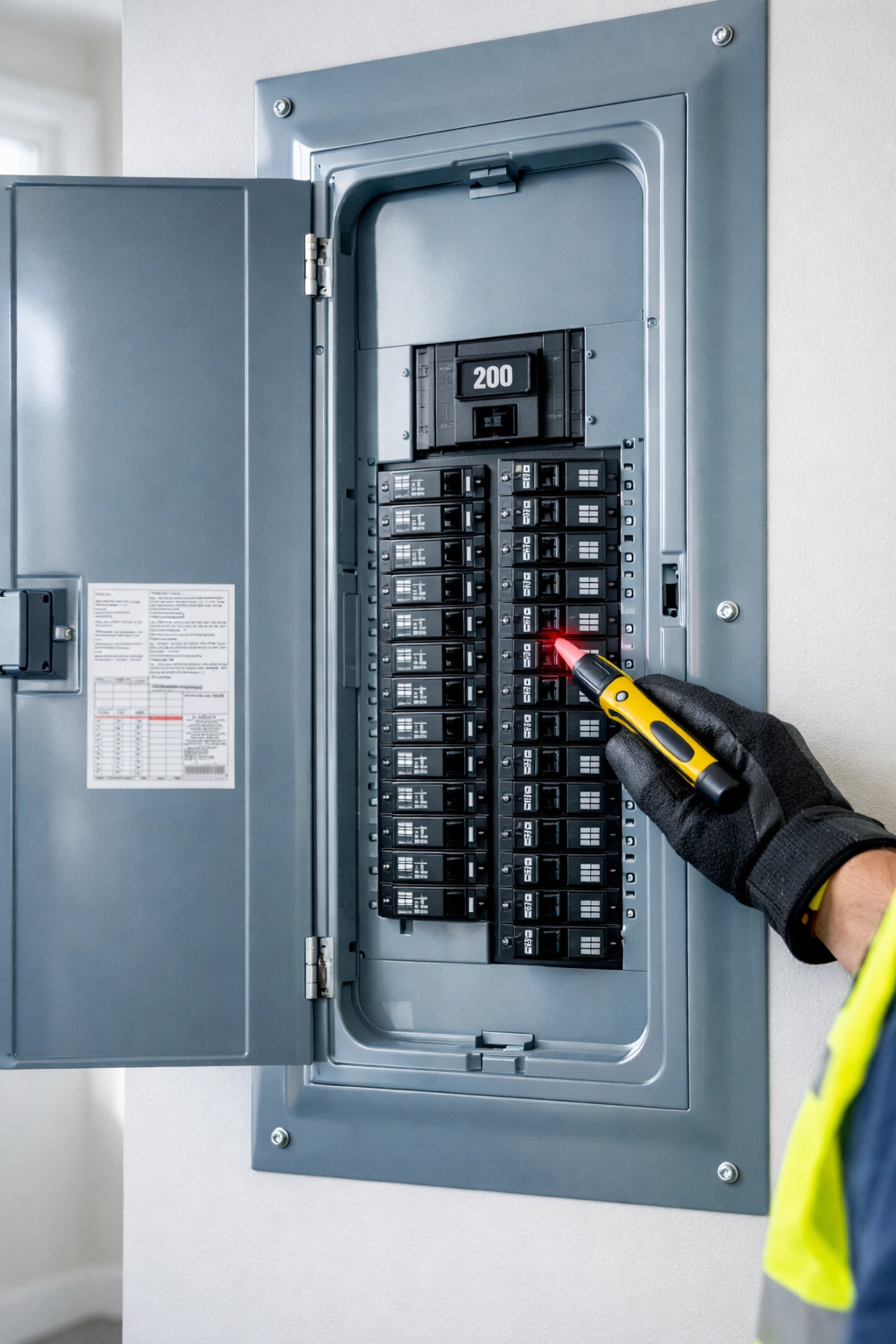
When Your Clients Need a Full Panel Replacement
Not every electrical issue requires ripping everything out, but there are clear-cut scenarios where replacement isn't optional: it's essential. Here's when you should be steering clients toward a complete panel replacement:
Age and Obsolescence
If the panel is over 25 years old, it's likely nearing the end of its functional life. Older panels weren't designed to handle modern electrical demands: think multiple HVAC systems, home offices, smart home devices, and electric vehicle charging.
Recalled or Dangerous Brands
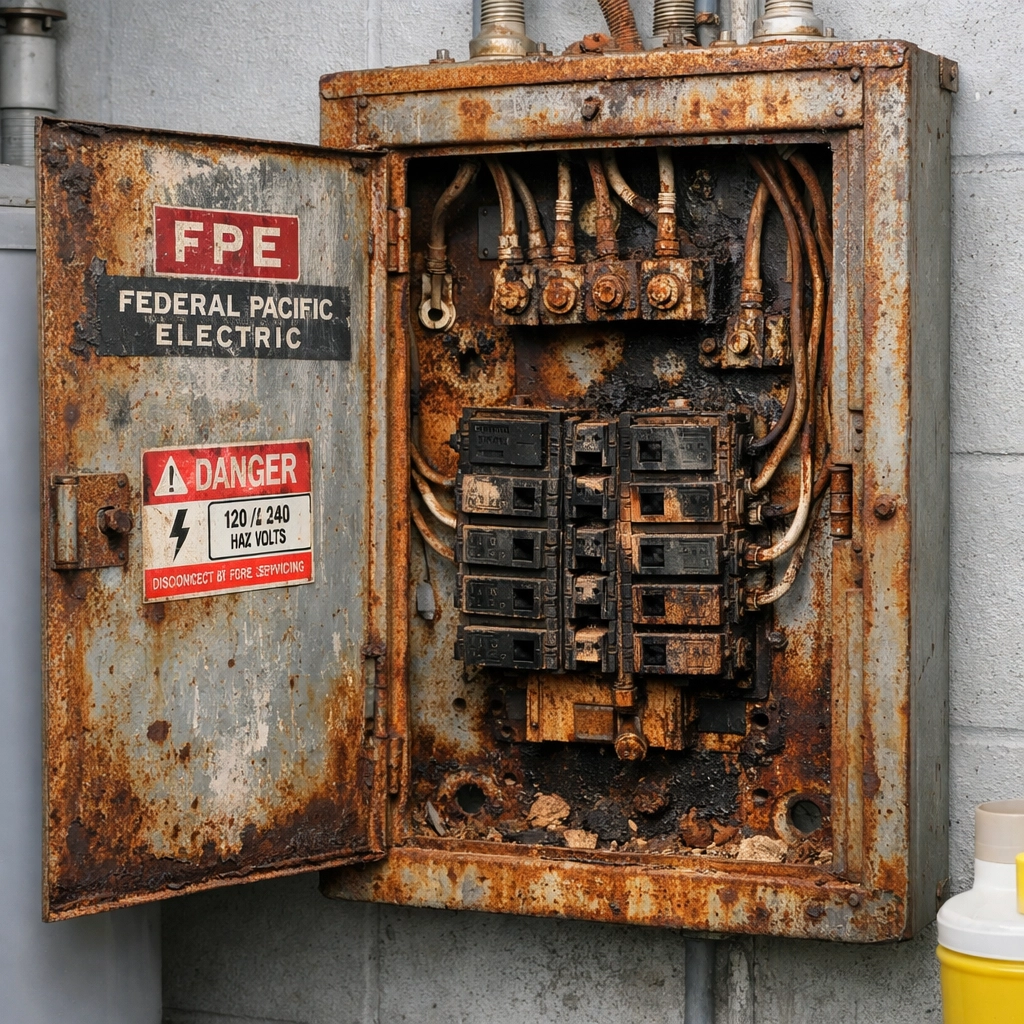
Federal Pacific Electric (FPE) and Zinsco panels are notorious in Florida homes built before 1990. These panels have documented failure rates and often don't trip when they should, creating serious fire hazards. If you spot these during an inspection, replacement should be non-negotiable. Insurance companies in Florida are increasingly flagging these panels, and some won't even insure properties with them.
Chronic Electrical Issues
When breakers trip constantly, lights flicker regularly, or your client smells burning near the panel, that's your electrical system waving a giant red flag. Multiple recurring problems despite repairs usually mean the panel itself is compromised.
Visible Damage or Corrosion
Florida's humidity is brutal on electrical systems. Panels showing rust, corrosion, scorch marks, or moisture damage need immediate replacement. You don't repair a corroded panel: you replace it before it fails catastrophically.
When an Upgrade Might Be Enough
Not every call for help requires a complete system overhaul. Sometimes, a targeted upgrade gets the job done and saves your client money. Here's when an upgrade makes sense:
- Adding capacity for specific upgrades: Your client wants to install an EV charger, upgrade to a whole-house generator, or add a pool with equipment that demands more power
- Increasing amperage: Moving from a 100-amp to a 200-amp service without replacing the entire panel enclosure
- Single-issue repairs: One faulty breaker or a loose connection that's been identified and isolated
- Minor code compliance updates: Bringing a relatively modern panel up to current Florida Building Code standards
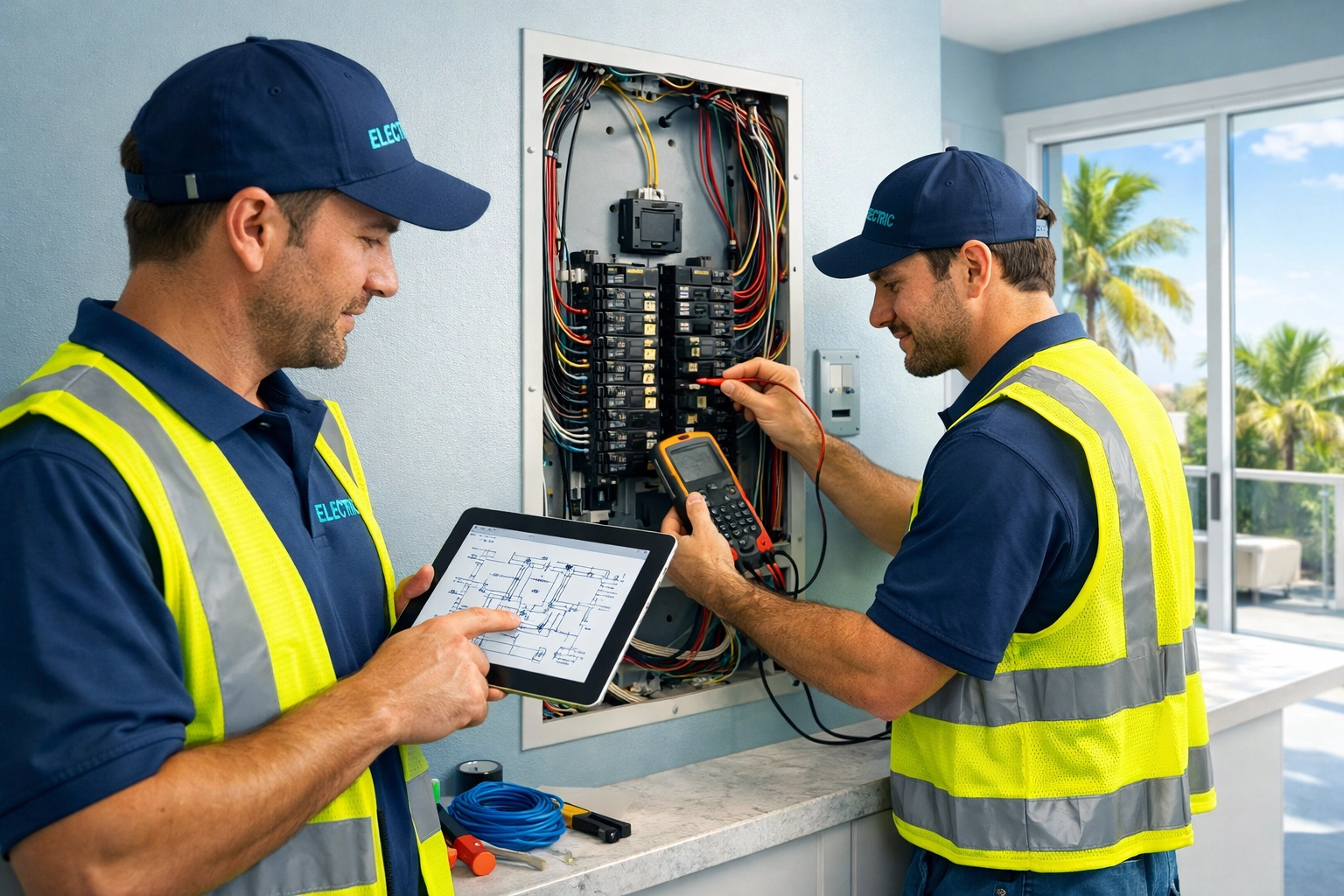
The thing is, you can't know for sure without a proper assessment by a licensed electrician. What looks like a simple upgrade on the surface might reveal underlying issues that require full replacement.
Florida Code Requirements You Can't Ignore
Here's where things get Florida-specific, and it matters. Every electrical panel replacement or upgrade in Florida requires permits and inspections. There's no shortcuts here: unlicensed or unpermitted work creates massive liability for everyone involved.
Local Jurisdiction Variations
While Florida follows the National Electrical Code (NEC) as its baseline, individual counties and municipalities add their own amendments. What passes inspection in Broward County might not fly in Alachua County. Licensed electricians know these variations, but contractors and realtors should at least be aware they exist.
Grounding and Bonding Standards
Older Florida homes often lack proper grounding systems. Modern code requires proper grounding and bonding, which might mean additional work beyond just swapping the panel. This can add to project costs but isn't optional.
AFCI and GFCI Protection
Current Florida code requires Arc Fault Circuit Interrupter (AFCI) protection for most living areas and Ground Fault Circuit Interrupter (GFCI) protection in wet locations like bathrooms, kitchens, garages, and outdoor outlets. Panel upgrades or replacements need to include these safety features.
Hurricane and Surge Protection Standards
Florida properties face unique storm-related electrical risks. Modern panels should accommodate whole-house surge protectors and proper grounding to handle lightning strikes and power surges during hurricane season.
The Cost Conversation (and ROI for Your Clients)
Let's talk numbers because your clients are going to ask. A 200-amp panel replacement in Florida typically runs between $2,000 and $4,500. That includes permits, labor, materials, and any minor additional work like updating grounding or adding required GFCI/AFCI breakers.
What drives costs higher?
- Older homes requiring meter upgrades or service entrance work
- Properties needing significant rewiring to meet current code
- Additional upgrades bundled with panel work (surge protection, generator hookups, etc.)
- Geographic location and local permit fees
What's the return on investment?
For homeowners planning to stay in the property, a modern panel handles current electrical demands safely and accommodates future upgrades without additional expensive work. For homeowners preparing to sell, it's a competitive advantage that can justify higher asking prices and reduce buyer negotiation leverage over electrical concerns.
Insurance is another factor. Homes with modern, code-compliant electrical systems often qualify for lower insurance premiums: a real selling point in Florida where weather-related risk already drives insurance costs through the roof.
Why This Matters for Realtors
If you're a realtor, here's your bottom line: electrical panels are increasingly becoming deal-makers or deal-breakers. Modern buyers: especially first-time homebuyers and tech-savvy millennials: prioritize homes that can handle their lifestyle without immediate major investments.
A home with a Federal Pacific panel or a 60-amp service from 1975? That's a negotiation problem waiting to happen. Buyers will either request panel replacement as a condition of sale, demand price reductions to cover the cost, or walk away entirely if competing properties offer modern electrical infrastructure.
On the flip side, sellers who proactively handle panel upgrades or replacements before listing gain competitive advantages:
- Faster inspections with fewer issues flagged
- Reduced buyer anxiety about safety and future costs
- Marketing opportunities emphasizing "move-in ready" and "recently upgraded electrical system"
- Stronger position during negotiations
When you're previewing properties or advising sellers, flag electrical panels early. Get a licensed electrician to assess the system before listing. It's easier to address electrical issues before buyers get spooked during their inspection phase.
Hurricane Season and Electrical Infrastructure
Let's address the elephant in the room: Florida's hurricane risk. Modern electrical panels aren't just about handling day-to-day power demands: they're critical for storm preparedness and recovery.
Backup Generator Compatibility
More Florida homeowners are investing in whole-house generators after experiencing extended power outages. Older panels often can't safely accommodate generator connections. A modern 200-amp panel with proper transfer switch capacity is essential for generator installation.
Surge Protection
Lightning strikes and power surges during storms wreak havoc on electrical systems. Modern panels accommodate whole-house surge protection devices that safeguard expensive appliances, HVAC systems, and electronics: a critical consideration in a state that sees more lightning strikes than anywhere else in the country.
Code Compliance for Insurance
After major hurricanes, insurance companies increasingly scrutinize electrical systems during claims and renewals. Homes with outdated, non-compliant panels face higher premiums or coverage denials. For realtors and contractors, this creates urgency around electrical upgrades that goes beyond immediate safety: it's about long-term insurability.
Making the Right Call for Your Clients
Here's the bottom line: whether your client needs a full panel replacement or targeted upgrade depends on their specific situation, and that determination requires a professional assessment by a licensed Florida electrician.
As a contractor or realtor, your job isn't to diagnose electrical systems: it's to recognize warning signs, ask the right questions, and connect clients with qualified professionals who can provide accurate assessments and code-compliant solutions.
Red flags to watch for include panels over 20 years old, recalled brands like FPE or Zinsco, visible damage or corrosion, chronic electrical issues, and insufficient capacity for modern demands. When you spot these, it's time to bring in the experts.
Working with licensed electrical contractors ensures your clients get proper permits, code-compliant installations, and work that protects everyone's liability. It's not just about doing the job right: it's about doing it legally and safely in a state with strict electrical codes and serious weather-related risks.
Electrical requirements vary by jurisdiction across Florida. Always consult local building authorities and work with licensed electrical professionals to ensure code compliance.
Whether you're a contractor coordinating renovations or a realtor navigating inspections and negotiations, understanding the difference between panel replacement and upgrade helps you guide clients toward smart, safe decisions. Florida Electrical Specialists works with contractors, realtors, and property owners throughout Florida to assess electrical systems, navigate permitting requirements, and deliver code-compliant panel solutions that meet modern safety standards and accommodate future needs.
When in doubt, get it checked out. Your clients will thank you when their electrical system handles everything they throw at it: from hurricane season to EV charging and beyond.