



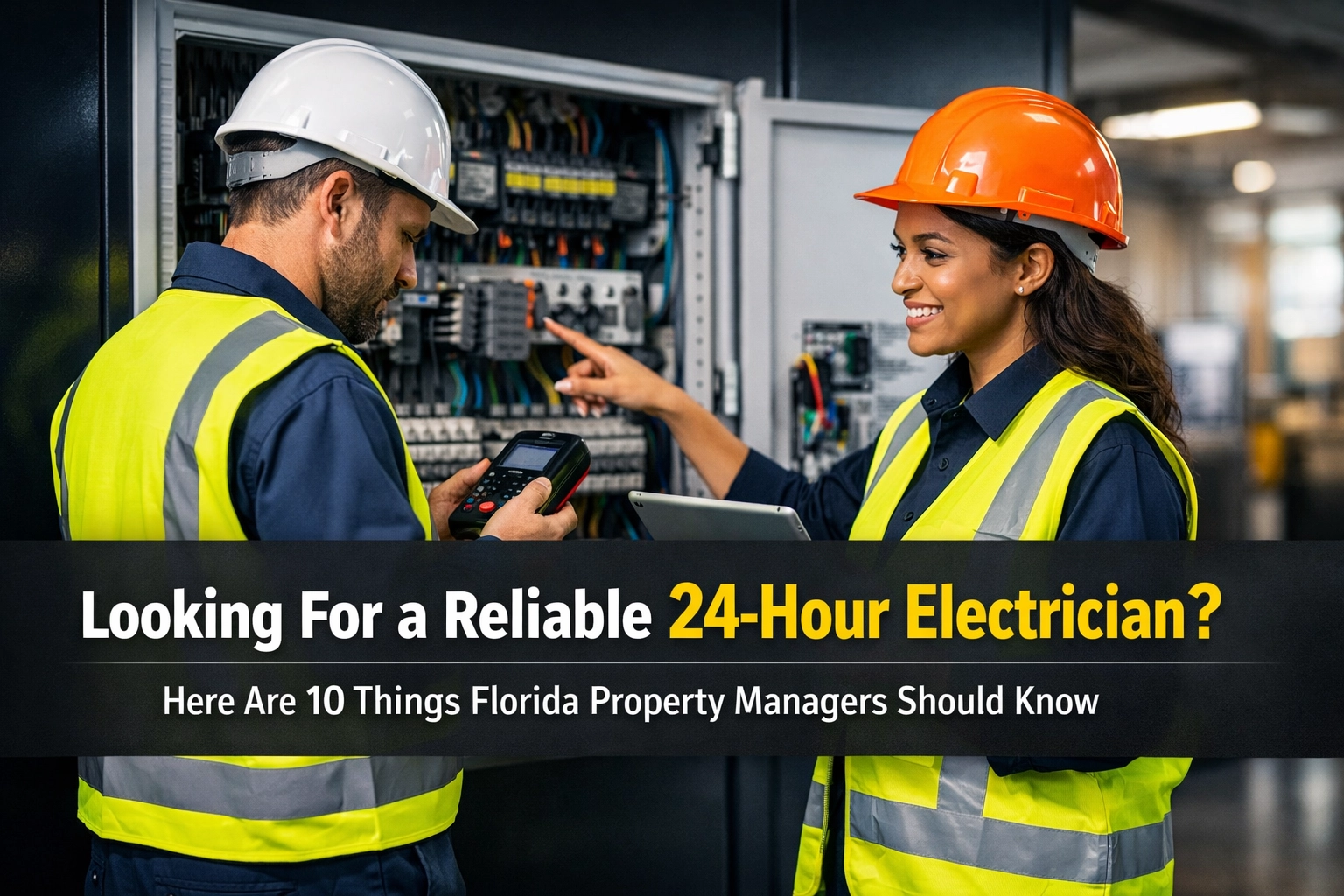
If you’re a property manager in the Sunshine State, you know that the "9-to-5" workday is more of a suggestion than a reality. It’s 2:00 AM on a humid Tuesday, and your phone starts buzzing. A tenant in one of your luxury rentals is reporting a sparking outlet, or perhaps an entire wing of a commercial building has lost power. This is where the frantic search for an "electrician near me" begins.
But here’s the thing: not all 24-hour electricians are created equal. In Florida, where tropical storms and high electrical demands are the norms, hiring the wrong person isn't just a minor inconvenience: it’s a liability risk. Whether you’re managing a single-family home in Orlando or a large complex in Miami, you need a partner who understands Florida-specific codes and the urgency of your situation.
At Florida Electrical Specialists, we’ve seen it all. To help you navigate the chaos of emergency repairs, we’ve put together the ultimate guide. Here are 10 things every Florida property manager should know before hiring a 24-hour electrician.
1. Verify the License Type (EC vs. Registered)
In Florida, licensing is everything. When you’re looking for a 24 hour electrician, you shouldn't just take their word for it. The Florida Department of Business and Professional Regulation (DBPR) issues different types of licenses, and you need to know the difference.
A Certified Electrical Contractor (EC) is licensed to work anywhere in the state of Florida. They’ve passed rigorous exams and have documented years of experience. A Registered Electrical Contractor, on the other hand, is limited to specific local jurisdictions. For property managers overseeing assets across multiple counties, working with a Certified EC is usually the safer, more flexible bet.

2. The Insurance "Safety Net" is Non-Negotiable
As a property manager, you are the shield between the property owner and potential lawsuits. If an uninsured electrician gets injured on-site or causes a fire due to a faulty GFCI outlet installation, the financial fallout could land on your desk.
In Florida, licensed contractors are required to carry a minimum of $100,000 in public liability and $25,000 in property damage insurance. However, for 24-hour emergency work, you should look for professionals who carry much higher limits. Always ask for a Certificate of Insurance (COI) before they step onto the property.
3. Availability Doesn’t Always Mean Reliability
We’ve all seen the ads for a "24-hour electrician near me." But in reality, many of these "24-hour" services are just an answering service that will get back to you "first thing in the morning."
A truly reliable emergency electrician has a dispatched team ready to roll when the call comes in. When vetting a partner, ask them about their average response time during a hurricane or a major summer storm. You want a team that understands that a circuit breaker keeps tripping isn't just a nuisance: it’s a potential fire hazard that needs immediate attention. For more tips on vetting, check out the ultimate guide to finding a 24-hour electrician near me in Florida.
4. Understanding the "Why" Behind Tripped Breakers
When a tenant calls saying their circuit breaker keeps tripping, it’s tempting to just tell them to flip it back on. But for a property manager, this is a red flag. It could be an overloaded circuit, a short circuit, or a ground fault.
A professional electrician won’t just reset the breaker; they’ll diagnose the root cause. If the property is older, the issue might actually be that it’s time for an electrical panel upgrade. Identifying these issues early can save thousands in emergency repair costs later. If you're wondering if your managed property is at risk, take a look at our essential home electrical safety checklist 2026.

5. Florida Weather Demands Surge Protection
Florida is the lightning capital of the country. If your properties aren't equipped with a whole house surge protector, a single midnight storm can fry your tenants’ appliances and the property’s HVAC system.
Property managers should proactively suggest a whole house surge protector to owners. It’s a small investment that prevents massive emergency calls when the power grids fluctuate during our frequent thunderstorms.
6. The 2026 Reality: EV Charger Installation Requests
It’s 2026, and more tenants than ever are driving electric vehicles. If your property doesn't offer EV charging, you’re likely losing out on high-quality tenants. However, adding an EV charger isn't as simple as plugging it in.
An EV charger installation often requires an electrical panel upgrade to handle the increased load. When you call an emergency electrician for a repair, use that as an opportunity to have them evaluate the property’s capacity for future upgrades. You can find more info in our ultimate guide to EV charger installation.
7. Be Wary of "Band-Aid" Fixes
In an emergency, some electricians will provide a "quick fix" just to get the lights back on and get home. This is dangerous. For example, if a tenant reports an outlet not working, a temporary bypass might solve the immediate complaint but leave a loose wire that could cause an electrical fire.
Ensure your emergency electrician provides a written report of what was fixed and why. If they mention that a component is outdated, pay attention. Knowing the difference between an electrical panel replacement vs upgrade can help you give the property owner the best advice for their budget and safety.

8. Communication is Key for Tenant Relations
When an electrical emergency happens, tenants get stressed. They’re worried about their food spoiling, their electronics breaking, or their safety. A great 24-hour electrician doesn’t just fix the wires; they communicate professionally with the tenant.
As a property manager, you want an electrician who will represent your management company well. They should be clean, polite, and able to explain the situation clearly without causing unnecessary alarm.
9. Continuing Education and Code Compliance
Florida electrical codes are updated frequently to account for new technology and safety standards. Licensed electricians in Florida are required to complete 11 hours of continuing education every two years.
When you hire Florida Electrical Specialists, you’re hiring experts who are up-to-date on the latest requirements for GFCI outlet installation in kitchens and bathrooms, as well as the newest standards for electrical panel replacement. Using a contractor who isn't current on code can lead to failed inspections and costly rework.

10. Prevention is Cheaper Than an Emergency
The best way to manage a 24-hour electrical crisis is to prevent it from happening. Regular inspections can identify warning signs that a home needs rewiring before a wire shorts out and causes an emergency.
Establish a relationship with a reliable electrical team. Having a "go-to" pro means they already know your properties, your owners' preferences, and the specific quirks of the buildings you manage.
Conclusion: Don’t Wait for the Spark
Managing property in Florida is challenging enough without having to worry about who to call when the power goes out at midnight. By vetting your emergency electrician before the emergency actually happens, you save yourself stress, protect your owners' investments, and keep your tenants safe.
Whether you need a quick fix for a circuit breaker keeps tripping, a proactive whole house surge protector installation, or a full electrical panel upgrade, we’re here to help.
Electrical requirements may vary by jurisdiction. Always consult local authorities or a licensed Florida electrical professional like Florida Electrical Specialists to ensure your property remains safe and compliant.
Ready to future-proof your properties? Florida Electrical Specialists is here to help property managers across Florida stay ahead of the curve. Give us a call today: before the next storm hits!
