



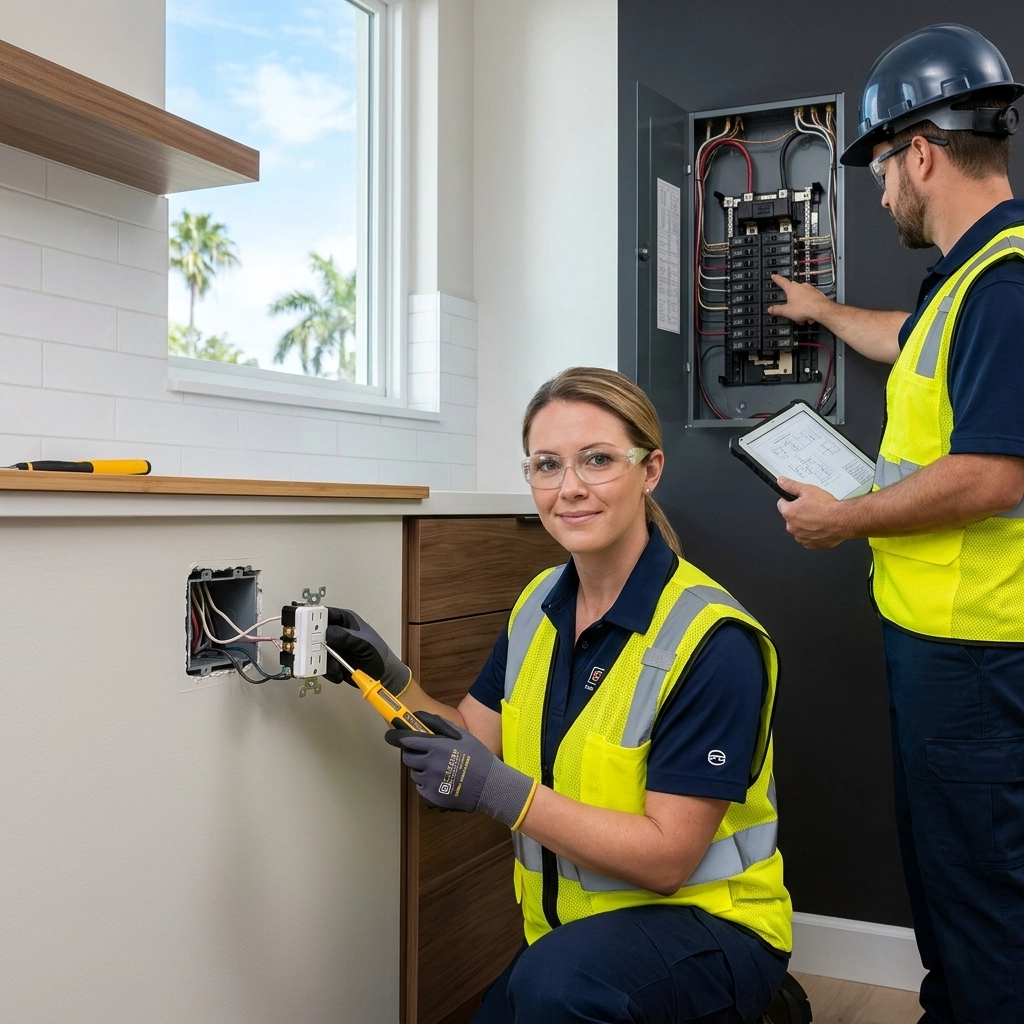
If you live in Florida, you know that water and electricity are a constant, high-stakes pairing. Between our afternoon thunderstorms, high humidity, and the fact that almost everyone has a pool, outdoor kitchen, or hot tub, the Ground Fault Circuit Interrupter (GFCI) outlet is the unsung hero of your home’s safety system.
When you notice an outlet not working in your kitchen or bathroom, your first instinct might be to head to the hardware store, grab a replacement, and DIY the project. While we love a proactive homeowner, GFCI outlets are significantly more complex than standard receptacles. A small mistake during installation doesn't just mean the outlet won't work: it could mean you’ve lost the very shock protection that keeps your family safe.
At Florida Electrical Specialists, we see these errors daily. Here are the seven most common mistakes homeowners make with GFCI outlet installation and how you can fix them to keep your home up to code.
1. Mixing Up "LINE" and "LOAD" Terminals
This is the single most common mistake we see. On a standard outlet, it doesn't matter much which set of screws you use if you aren't daisy-chaining outlets. On a GFCI, it is absolutely critical.
- The Mistake: Connecting the incoming power wires (the ones coming from the breaker) to the "LOAD" terminals.
- The Problem: If you do this, the outlet might still provide power, but the internal "trip" mechanism won't work. You’ll have electricity, but zero life-saving protection.
- The Fix: Look closely at the back of the GFCI. The "LINE" terminals are for the incoming power. The "LOAD" terminals (usually covered by a yellow sticker from the factory) are only used if you want this GFCI to protect other standard outlets downstream on the same circuit.
2. Ignoring the "Florida Factor": Not Using Weather-Resistant (WR) Outlets
Florida’s climate is brutal on electrical components. Between the salt air near the coast and the 90% humidity in the summer, standard outlets corrode quickly.
- The Mistake: Installing a standard indoor GFCI in an outdoor or damp location.
- The Problem: Standard GFCIs will "nuisance trip" (trip for no reason) or fail entirely due to moisture-induced corrosion. This often leads to a frantic call for an emergency electrician when the pool pump or patio lights won't turn on.
- The Fix: Look for the "WR" (Weather Resistant) stamp on the face of the outlet. Florida code requires WR-rated GFCIs for all outdoor locations, decks, and damp areas. These are built with corrosion-resistant components to handle the Sunshine State’s moisture.

3. Overstuffing the Electrical Box (Box Fill Issues)
GFCI outlets are much bulkier than standard receptacles because they contain a complex internal circuit board and a sensing transformer.
- The Mistake: Trying to jam a large GFCI into a small, shallow, or already crowded electrical box.
- The Problem: Forcing the device back into the box can pinch wires, loosen connections, or cause a short circuit. If you have to push with all your weight to get the screws to reach, you’re creating a fire hazard.
- The Fix: If the box is too small, you may need to replace it with a "deep" box or a surface-mount extension. If the wiring inside is a mess, you might need a Florida electrical professional to help tidy the "box fill" to meet safety standards.
4. Loose "Back-Stabbed" Connections
Many outlets allow you to simply push the wire into a hole in the back instead of wrapping it around a screw. This is known as "back-stabbing."
- The Mistake: Relying on the push-in tension to hold the wire in place.
- The Problem: Over time, the heat from electricity causes wires to expand and contract. In Florida’s heat, this happens even faster. These connections eventually loosen, leading to arcing, which can melt the outlet or start a fire. This is a common reason for a circuit breaker keeps tripping.
- The Fix: Use the "side-wire" method. Create a "U" shape with your wire, wrap it clockwise around the screw terminal, and tighten it firmly. Many high-quality GFCIs have "pressure plates" on the back where you insert the wire and then tighten the screw to clamp it down: this is the most secure method.
5. Bootleg Grounds and Misidentified Wires
A GFCI can technically function without a ground wire (it measures the balance between hot and neutral), but it is far safer: and often required by modern code: to have a proper ground.
- The Mistake: Connecting the neutral wire to the ground screw (a bootleg ground) or failing to identify which wire is "hot" before starting.
- The Problem: This creates a massive safety risk. If your home has older wiring (like the cloth-covered or aluminum wiring found in many 1960s-era Florida homes), assuming the colors are correct is dangerous.
- The Fix: Use a non-contact voltage tester to identify the hot wire. If your home lacks a ground wire, the GFCI must be labeled with the provided "No Equipment Ground" sticker. If you’re unsure about your home’s wiring health, it may be time for an electrical panel upgrade to bring the whole system up to modern safety standards.

6. Not Testing the "Downstream" Protection
One of the coolest things about a GFCI is that one outlet can protect every other outlet that comes after it on the circuit.
- The Mistake: Assuming every outlet in your kitchen needs to be a GFCI device.
- The Problem: If you wire multiple GFCI devices in a row (series), they can "fight" each other. If one trips, it might trip the one before it, making it incredibly annoying to figure out where the fault is.
- The Fix: Use one GFCI at the start of the circuit (the "LINE" side) and connect the rest of the standard outlets to the "LOAD" side. After installation, use a GFCI plug-in tester to verify that pressing the "test" button on the first outlet actually cuts power to the ones downstream.
7. Ignoring the Signs of a Failing Electrical Panel
Sometimes, the mistake isn't how you installed the outlet, but that you're trying to fix a symptom of a much larger problem.
- The Mistake: Replacing a GFCI over and over because it keeps tripping, without checking the breaker panel.
- The Problem: If your circuit breaker keeps tripping or your GFCI won't reset, the issue might be an overloaded circuit or an aging panel that can no longer handle your home's modern electrical load (like that new EV charger installation you just did).
- The Fix: If a brand-new, correctly installed GFCI continues to trip, stop. You might need an electrical panel replacement. Aging panels from brands like Federal Pacific or Zinsco (common in older Florida developments) are known fire risks and struggle with GFCI compatibility.
Why Florida Codes Matter
Florida’s building codes are some of the strictest in the country for a reason. Our proximity to water and frequent lightning strikes makes electrical safety a life-or-death matter. Whether you are a homeowner trying to stay safe, a realtor preparing a home for sale, or a contractor working on a renovation, ensuring GFCI outlets are installed correctly is non-negotiable.
Incorrectly installed outlets can lead to failed home inspections, denied insurance claims after a fire, and, most importantly, electrical shocks.

When to Call an Expert
DIY projects are great for painting a room or fixing a leaky faucet, but electricity is different. If you find yourself staring at a tangle of wires, or if your outlet is not working even after a replacement, it’s time to call a professional.
Searching for an electrician near me or a 24 hour electrician? Florida Electrical Specialists is here to help. We specialize in everything from simple GFCI troubleshooting to complex whole house surge protector installations and electrical panel upgrades.
Summary Checklist for a Successful GFCI Install:
- Identify the LINE wires (the ones with power).
- Turn off the breaker and verify with a tester.
- Check for "WR" rating if the outlet is near a sink, bathroom, or outdoors.
- Avoid "back-stabbing" wires; use the screw terminals.
- Don't over-tighten or cram wires into a small box.
- Test the outlet using the "Test" and "Reset" buttons on the face.
- Label the outlet if it's protecting others downstream.
Disclaimer: Electrical requirements may vary by jurisdiction. Always consult local authorities or a licensed Florida electrical professional before performing work on your home’s electrical system.
Working with a licensed Florida electrical contractor can help ensure code compliance and avoid costly inspection failures. If you're ready to ensure your home is safe, contact Florida Electrical Specialists today for a comprehensive safety inspection.
Stay safe and keep those circuits dry, Florida!