



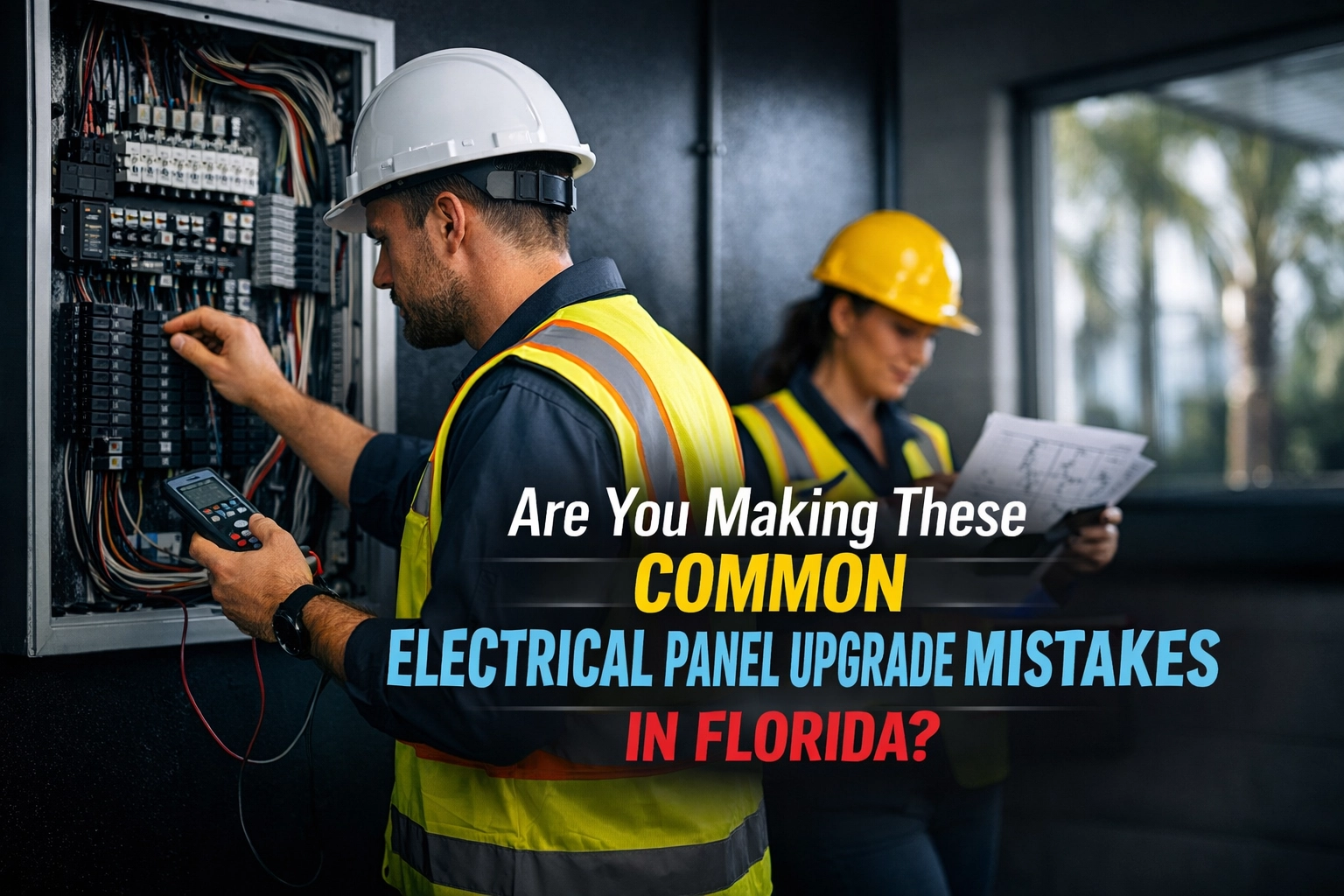
Your electrical panel is the heart of your home's electrical system, distributing power to every outlet, appliance, and light fixture. In Florida, where air conditioning runs year-round and summer storms test our electrical infrastructure, panel upgrades are common: and so are the mistakes homeowners make when tackling them.
Whether you're a homeowner planning a renovation, a realtor preparing a property for sale, or a contractor managing a flip, understanding these electrical panel mistakes could save you from code violations, failed inspections, and serious safety hazards. Let's walk through the most common errors and how to avoid them.
Mistake #1: Overloading Your Panel Beyond Capacity
Here's a scenario that plays out way too often: A homeowner adds a hot tub, installs an EV charger, and upgrades their kitchen appliances: all without considering whether their electrical panel can handle the load.
The 80% Rule You Can't Ignore
The National Electrical Code requires that total circuit amperage stays under 80% of your panel's capacity. If you have a 200-amp panel, your continuous loads shouldn't exceed 160 amps. Go beyond this, and you're creating a fire hazard and violating code.
Signs your panel is overloaded include:
- Breakers that trip frequently, especially when multiple appliances run simultaneously
- Dimming lights when large appliances kick on
- Burning smells near the panel
- Warm or hot panel cover
Florida's climate makes this worse. With central AC running constantly during our long summers, your panel is already working harder than in most states. Adding more circuits without upgrading capacity is asking for trouble.
Mistake #2: Installing Mismatched Breakers
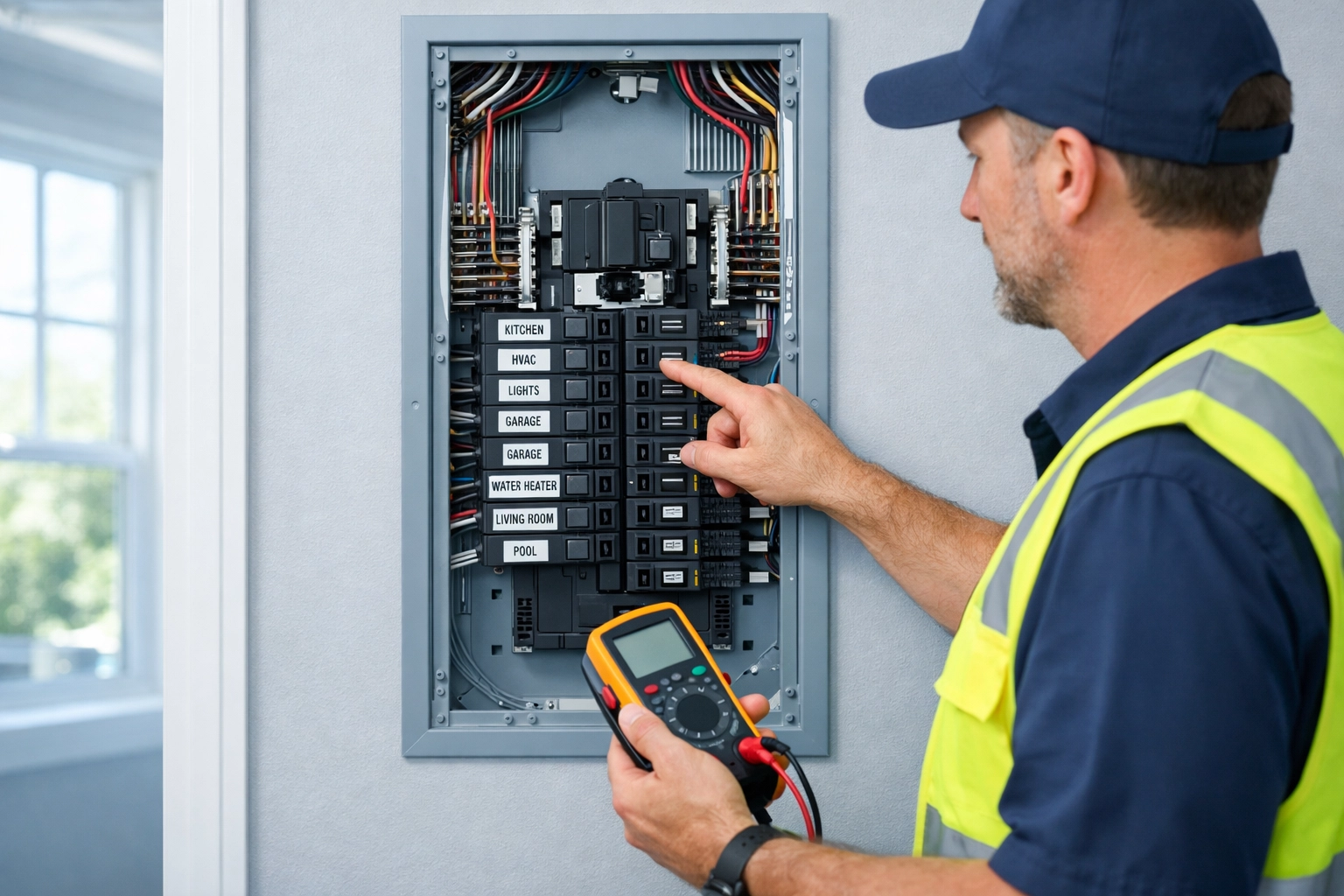
Not all breakers are created equal, and this is where many DIY enthusiasts and even some inexperienced contractors go wrong.
Why Brand Compatibility Matters
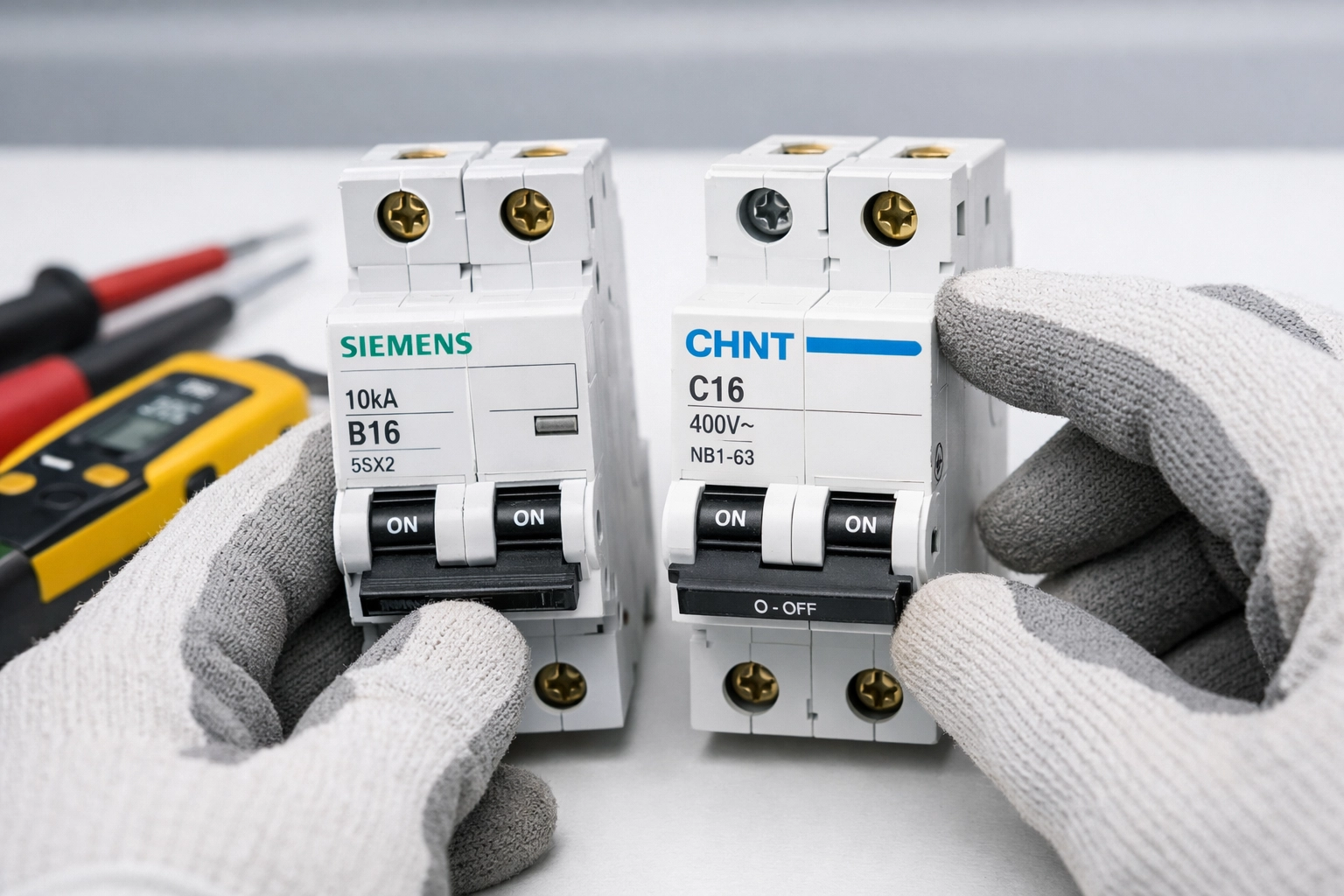
Every electrical panel manufacturer designs their breakers with proprietary bus bar connections and mounting systems. A Square D breaker might physically fit into a Siemens panel, but it's not UL-listed for that application: and that creates liability issues and code violations.
Using mismatched breakers can cause:
- Poor electrical contact leading to arcing
- Overheating at connection points
- Breaker failure when you need it most
- Automatic inspection failures
Before purchasing replacement breakers, check your panel's label and verify the exact model number. If you're unsure, a licensed electrician can identify the correct breakers for your specific panel.
Mistake #3: Double Tapping Breakers
This shortcut seems convenient: connecting two wires under a single breaker terminal: but it's a recipe for disaster.
The Hidden Dangers of Double Tapping
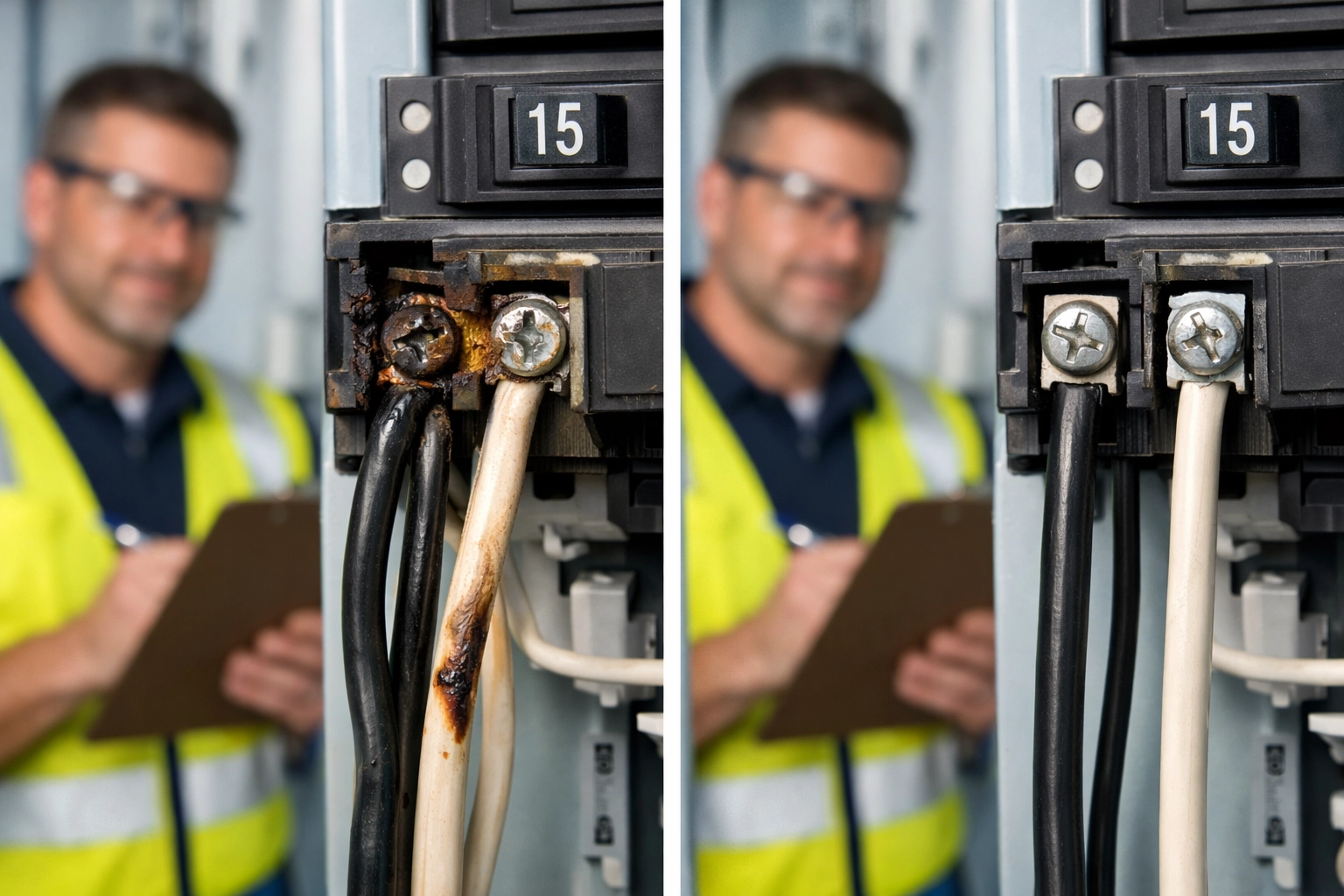
Unless your breaker is specifically rated for double taps (which most aren't), connecting two circuits to one breaker creates loose connections. Those loose connections cause arcing, excessive heat, and eventual electrical failure.
Double tapping violates the National Electrical Code and Florida Building Code, and it's one of the first things inspectors flag during electrical inspections. If you need additional circuits, the solution is installing a larger panel or adding a subpanel: not cramming multiple wires into existing breakers.
Mistake #4: Improper Grounding and Bonding
In Florida, where we experience more lightning strikes than any other state, proper grounding isn't just a code requirement: it's essential protection for your family and property.
What Goes Wrong with Grounding
Poor grounding and bonding leave your electrical system vulnerable to:
- Lightning surge damage
- Electrical shock hazards
- Equipment failure
- Stray current issues
Common grounding mistakes include:
- Disconnected or corroded ground wires
- Improper neutral-to-ground bonding
- Missing or inadequate grounding electrode system
- Ground wires that are too small for the service amperage
Florida's sandy soil and high water table create unique grounding challenges. The ground rod resistance requirements may differ from what works in other states, and proper installation requires understanding local soil conditions and code requirements.
Mistake #5: Undersized Wiring
When upgrading an electrical panel, some contractors focus on the panel itself while neglecting the wiring that feeds it: or the branch circuits connected to it.
Why Wire Sizing Matters
Using wires that are too small for the electrical load causes rapid overheating. The insulation melts, increasing fire risk exponentially. This happens most often when:
- Adding new high-amperage appliances without upgrading wire gauge
- Extending existing circuits beyond their intended capacity
- Installing EV chargers on circuits designed for standard outlets
In Florida's attics, where temperatures routinely exceed 140°F during summer, undersized wiring becomes even more dangerous. The ambient heat adds to the heat generated by electrical current, accelerating insulation breakdown.
For EV charger installation, dedicated circuits with properly sized conductors are non-negotiable.
Mistake #6: Inadequate GFCI Protection
Florida's electrical code requires GFCI (Ground Fault Circuit Interrupter) protection in specific locations, but many panel upgrades overlook these requirements.
Where GFCIs Are Required
You need GFCI protection in:
- Bathrooms (all outlets within 6 feet of water sources)
- Kitchens (countertop receptacles)
- Garages and unfinished basements
- Outdoor outlets
- Laundry areas
- Pool and spa equipment
Skipping GFCI installation or using outdated outlets creates serious shock hazards. In Florida's humid climate, the risk increases: moisture conducts electricity, making ground faults more likely.
Modern electrical panel upgrades should include GFCI protection either at the breaker level or at individual outlets. This is especially important for older homes that may have never had proper GFCI coverage.
Florida-Specific Environmental Challenges
Beyond these common mistakes, Florida's unique climate creates additional electrical panel concerns that other states don't face.
Salt Air and Coastal Corrosion
If you live near the coast, salt air accelerates corrosion on electrical components. Rust forms on bus bars, terminals, and breaker connections, creating high-resistance connections that generate heat and potential failure points.
Coastal homes benefit from:
- Corrosion-resistant panels and breakers
- Regular inspection and maintenance
- Proper sealing against moisture intrusion
High Humidity Year-Round
Florida's humidity doesn't just affect comfort: it impacts electrical systems. Moisture infiltration causes:
- Rust and corrosion inside panels
- Short circuits
- Weak connections that arc
- Premature component failure
Indoor panels should be located away from bathrooms, laundry rooms, and other high-moisture areas whenever possible.
Air Conditioning Demands
Florida homes run AC 8-10 months per year, some year-round. This constant demand stresses older electrical panels that were sized for different usage patterns. Many homes built before the 1990s have panels that can't safely support modern HVAC systems plus today's other electrical loads.
When DIY Becomes Dangerous
Let's be clear: electrical panel upgrades aren't DIY projects. This work requires:
- Licensed electrician expertise
- Proper permits from your local building department
- Utility coordination for service disconnection
- Code-compliant installation
- Final inspection approval
Projects That Always Need a Professional
Call a licensed electrician for:
- Amperage upgrades (from 100-amp to 200-amp service, for example)
- Main breaker replacement
- Grounding system updates
- Circuits for large appliances or home additions
- Any work inside the panel itself
DIY electrical work without permits creates serious problems down the road. Home sales get delayed when unpermitted work is discovered. Insurance companies may deny claims for electrical fires originating from unpermitted installations. And most importantly, improperly installed electrical systems put lives at risk.
Understanding the difference between electrical panel replacement and upgrades helps you make informed decisions about your property.
Protecting Your Investment
Your electrical panel upgrade is an investment in safety, code compliance, and your home's value. Avoiding these common mistakes means:
- Passing inspections the first time
- Maintaining proper insurance coverage
- Preventing electrical fires
- Supporting modern electrical demands
- Meeting disclosure requirements for property sales
Working with experienced electrical contractors who understand Florida codes, climate challenges, and local inspection requirements makes all the difference. They'll size your panel correctly, use appropriate materials for Florida's environment, and ensure every connection meets safety standards.
Final Thoughts
Electrical panel upgrades in Florida come with unique challenges: from our lightning-prone weather to year-round cooling demands and coastal corrosion. The mistakes we've covered can seem minor, but each one creates real safety hazards and code violations.
Whether you're planning an upgrade for your own home or managing a property renovation, understanding these common errors helps you ask the right questions and ensure the work gets done safely and correctly.
Electrical requirements may vary by jurisdiction. Always consult local authorities or a licensed Florida electrical professional before starting any electrical project.
For help with electrical panel upgrades, code compliance, and safe installations throughout Florida, Florida Electrical Specialists provides experienced service from licensed electricians who understand our state's unique requirements.