


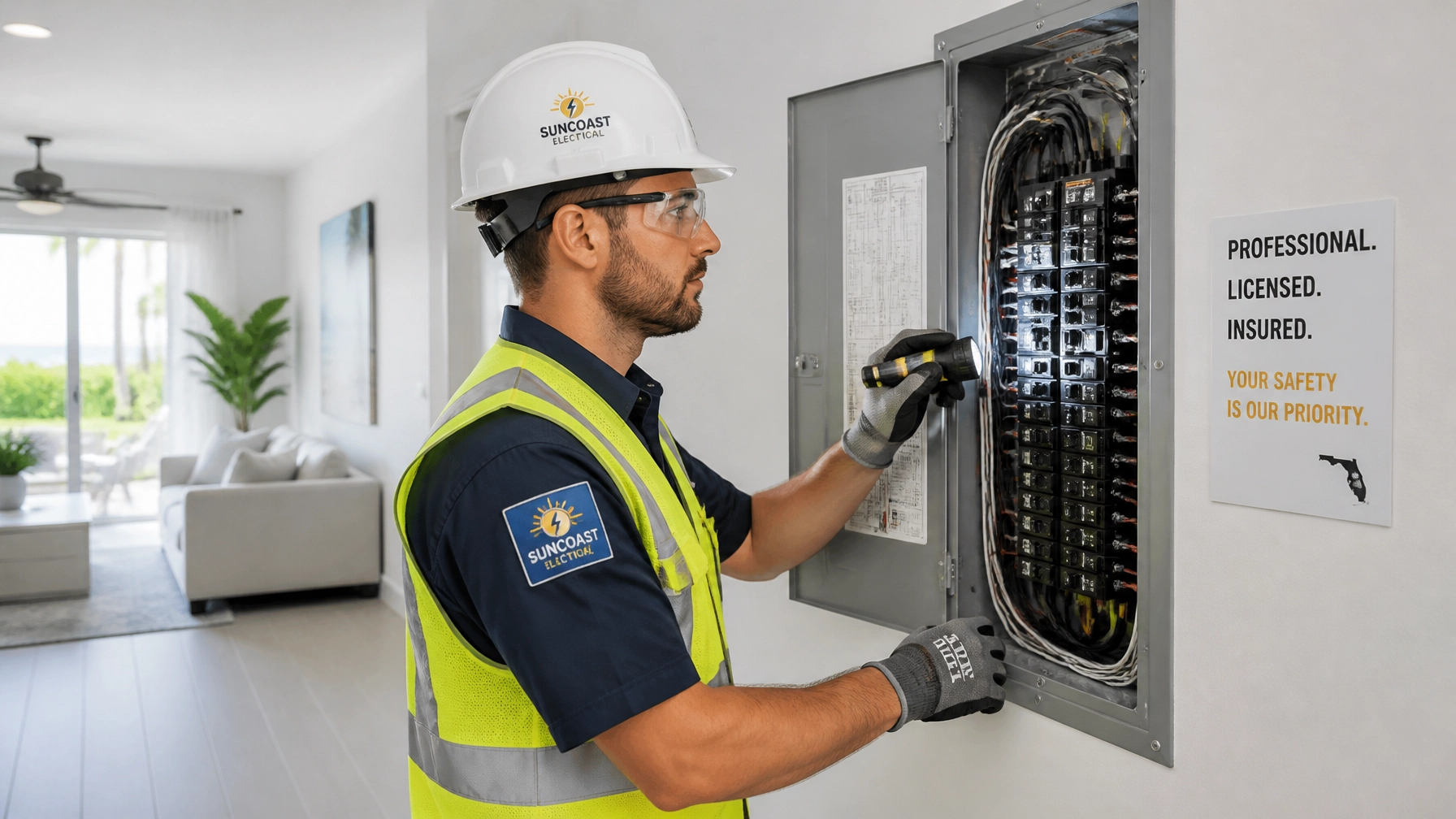
If you own a home, manage properties, or build residential and commercial projects across the Sunshine State, you already know that dealing with electricity is entirely different here than anywhere else in the country. From brutal afternoon lightning storms and high humidity to the rigorous mandates of the 2026 Florida Building Code (9th Edition, based on the 2023 NEC), staying safe and code-compliant requires true expertise.
Whether you're searching for an electrician near me because an outlet not working is driving you crazy, or you're planning a major commercial build, understanding Florida's electrical landscape protects your investment, your family, and your peace of mind. In this comprehensive guide, we'll break down the top electrical services, code updates, and climate challenges every Floridian needs to know in 2026.
Navigating Florida’s 2026 Electrical Codes and Climate Challenges
Florida's unique climate creates punishing conditions for electrical infrastructure. Salt air in coastal zones, extreme ambient humidity, and intense seasonal lightning storms put relentless stress on wiring, panels, and grounding systems.
Under the 9th Edition of the Florida Building Code, which aligns closely with the 2023 National Electrical Code (NEC), standards have tightened significantly regarding:
- Expanded AFCI (Arc-Fault Circuit Interrupter) protection across nearly all 120-V, 15- and 20-A living spaces, kitchens, and garages.
- Enhanced GFCI (Ground-Fault Circuit Interrupter) requirements for moisture-prone locations, outdoor equipment, and all kitchen receptacles.
- Robust grounding and surge suppression to safeguard against lightning-induced power surges.
When electrical issues arise, ignoring them is never an option. Partnering with professionals who specialize in Florida electrical panel upgrades ensures that every repair or installation meets strict local and state standards.
1. Upgrading Your Electrical Capacity: Panels and Breakers
Is your home still relying on an aging electrical panel? Older panels often struggle to handle modern power demands: from high-capacity HVAC units running flat-out in July to multiple electronic devices and EV chargers.
Electrical Panel Upgrade & Panel Replacement
If your property features an outdated panel or brand names known for safety recalls (such as certain vintage models), an electrical panel replacement is critical. Upgrading increases your home's total amperage (typically to 200 amps or more), reduces fire hazards, and ensures seamless power distribution.

Troubleshooting a Circuit Breaker That Keeps Tripping
Have you noticed that your circuit breaker keeps tripping every time you run the microwave and toaster simultaneously? This is usually a sign of an overloaded circuit or a potential short. While resetting the breaker is easy, frequent tripping indicates an underlying wiring issue that requires a qualified professional to inspect.
2. Everyday Repairs: Outlets, Switches, and GFCI Safety
Electrical gremlins can pop up in any room. From a sudden outlet not working in the home office to flickering lights in the hallway, timely repairs prevent minor annoyances from escalating into dangerous hazards.
GFCI Outlet Installation
In bathrooms, kitchens, laundry rooms, and outdoor patios, moisture is an electrician's biggest enemy. A professional GFCI outlet installation cuts off power the microsecond an imbalance in current is detected, protecting you from severe electrical shock in damp environments.
3. Protecting Your Home Against Florida Lightning: Whole House Surge Protectors
Florida is the lightning capital of the United States. A single direct or nearby lightning strike can send thousands of volts surging through your electrical lines, instantly frying refrigerators, HVAC control boards, computers, and smart home systems.
To keep your electronics safe, investing in a whole house surge protector is essential. Unlike small plug-in strip suppressors, a hardwired whole-house unit intercepts surges right at your main electrical service entrance before they can enter your home's internal wiring grid.

4. Modern Conveniences: EV Charger Installation
As electric vehicles become increasingly popular across Florida's residential neighborhoods and commercial parking structures, reliable home charging is a top priority for drivers.
A professional EV charger installation ensures your Level 2 charging station is powered safely, efficiently, and in full compliance with local permitting rules. Attempting to DIY an EV charger setup or plugging into an unrated outlet can overheat your wiring and lead to premature failure or fire risks.

When to Call an Emergency Electrician
Electrical emergencies rarely happen during convenient business hours. Whether a severe summer squall damages your service drop, sparking occurs behind a wall switch, or total power failure strikes your commercial property at midnight, you need immediate help.
Having access to a dependable 24 hour electrician or emergency electrician ensures that hazardous situations are diagnosed and mitigated right away, minimizing downtime and restoring safety.
Conclusion: Ensuring Safety and Code Compliance Statewide
Navigating complex electrical codes, hurricane wind requirements, and everyday repair needs in Florida demands specialized knowledge, proper licensing, and rigorous attention to detail. Working with seasoned professionals helps you avoid costly inspection failures and safeguards your property for years to come.
Jurisdiction Disclaimer: Electrical requirements, permitting rules, and building codes may vary by county and local municipality across Florida. Always consult local authorities or a licensed electrical professional regarding specific project guidelines.
Working with a licensed Florida electrical contractor can help ensure code compliance and avoid costly inspection failures. Florida Electrical Specialists helps property owners navigate permits, inspections, and electrical code requirements statewide with 24-hour response times, transparent upfront pricing, and unmatched expertise across all 67 Florida counties.