



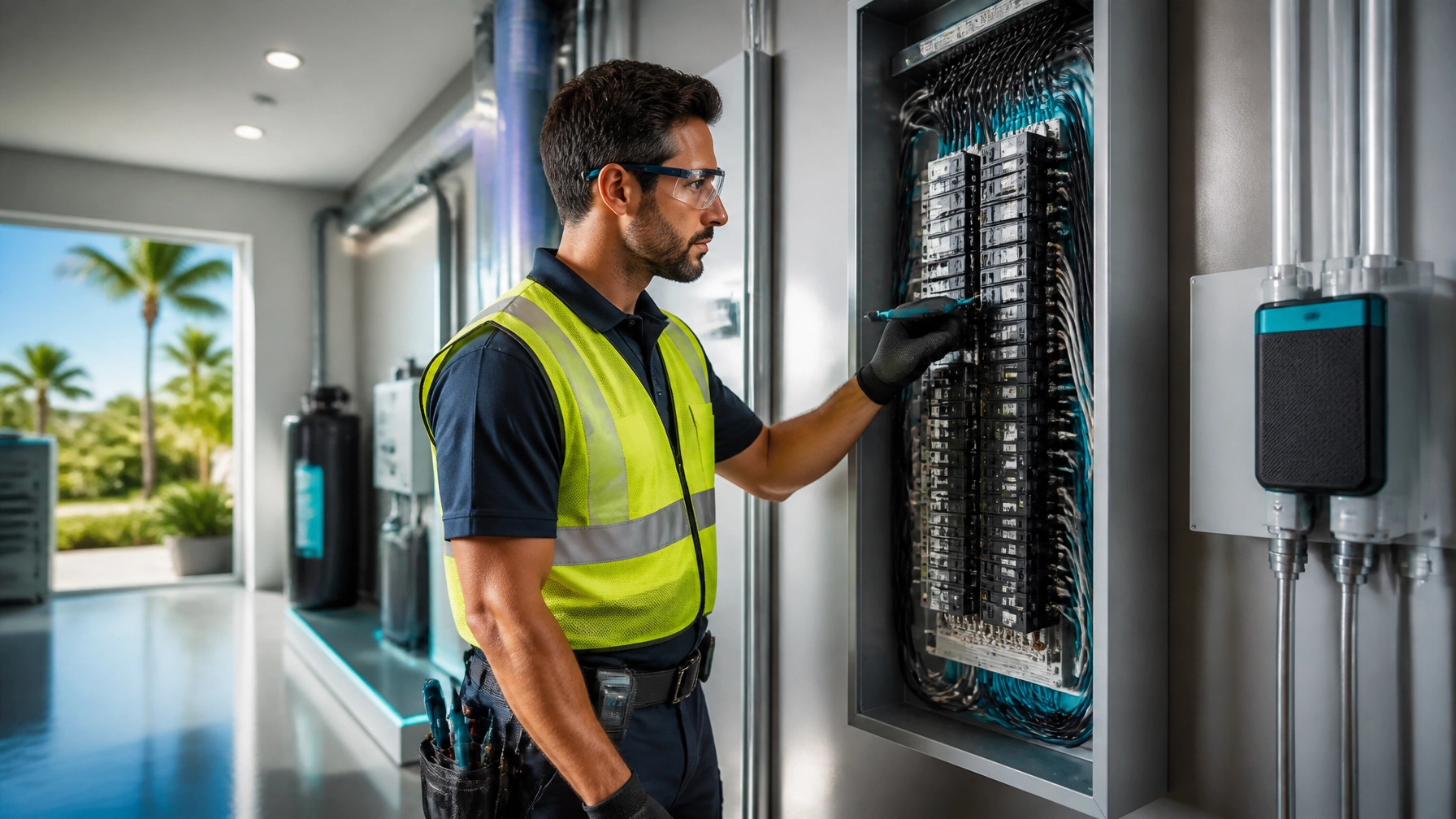
Hi there! If you’ve ever tried to run your air conditioner, the dishwasher, and a hair dryer at the same time only to have your afternoon interrupted by a sudden "click" and total darkness in half the house, you’ve met the limits of your electrical panel.
Think of your electrical panel as the "brain" or the "heart" of your home’s electrical system. It takes the massive amount of power coming from the utility company and distributes it into smaller "streams" for your lights, appliances, and gadgets. But here in Florida, our "brains" are being pushed to the limit more than ever before. Between the sweltering humidity that keeps our ACs running 24/7 and our growing love for high-tech gadgets and electric vehicles, older homes are struggling to keep up.
At Florida Electrical Specialists, we’ve seen it all: from panels that haven't been touched since the 1970s to modern systems struggling with new EV charger installations. If you’re wondering if your home is safe or if you’re searching for an electrician near me to handle a nagging issue, this guide is for you. Let’s dive into why an electrical panel upgrade is one of the smartest (and safest) moves you can make for your Florida property.
Signs Your Florida Home is Crying for Help
Often, your home doesn't just "fail" out of nowhere. It gives you little hints: sometimes subtle, sometimes quite loud: that the current panel is overwhelmed.
1. The "Circuit Breaker Keeps Tripping" Blues
If your circuit breaker keeps tripping, it’s doing its job: preventing a fire by shutting off the flow of electricity when it gets too hot. However, if this is happening frequently, it means your current panel simply doesn't have the capacity to handle your lifestyle. It’s a clear signal that an electrical panel replacement or upgrade is on the horizon.
2. Flickering or Dimming Lights
Do your lights dim every time the refrigerator kicks on or the AC starts up? This is called a "voltage drop." It happens because those large appliances are hogging all the available power, leaving your lights starving for energy. This isn't just annoying; it puts a strain on your electronics.
3. Discolored Outlets or Burning Smells
This is an emergency. If you notice a brown or black scorch mark on an outlet, or if you smell something like burning plastic near your breaker box, stop what you’re doing and call an emergency electrician immediately. This indicates that wires are overheating, which is a major fire hazard.

The Hidden Dangers: Hazardous Brands in the Sunshine State
Many Florida homes built between the 1950s and 1990s were equipped with panels that were once industry standards but are now known to be dangerous. If you have a panel from Federal Pacific Electric (FPE) or Zinsco, you are essentially sitting on a ticking time bomb.
These specific brands have a high rate of "failure to trip." This means that when a surge or overload occurs, the breaker stays "on," allowing the wires to get hotter and hotter until a fire starts. Most insurance companies in Florida will now refuse to cover a home (or will significantly hike premiums) if these panels are present. Checking if your electrical panel is outdated is the first step in protecting your family.
Why Capacity Matters in 2026
The way we live has changed drastically in the last twenty years. In the past, a 60-amp or 100-amp panel was plenty. Today, most modern Florida homes require at least a 200-amp service to operate safely and efficiently.
Modern AC Demands
Florida heat is no joke. Our HVAC systems are larger and run longer than almost anywhere else in the country. This constant draw of high-amperage power puts immense stress on older, smaller panels.
The Rise of Electric Vehicles
If you’re considering an EV charger installation, your current panel might not have the "room" for it. Adding a Level 2 charger is like adding another entire air conditioning unit to your home’s load. Without an electrical panel upgrade, you might find yourself choosing between a cool house and a charged car.
Smart Homes and High-End Appliances
From induction cooktops to smart refrigerators and whole-home audio systems, we are plugging in more than ever. Even an outlet not working in one room could be a symptom of a larger, systemic capacity issue across your whole house.

Florida-Specific Challenges: Humidity and Storms
Living in Florida comes with a specific set of environmental challenges that affect your electrical system more than you might think.
Corrosion and Humidity
Our salty, humid air is a silent enemy of metal. Over time, the copper or aluminum bus bars inside your electrical panel can corrode. Corrosion creates resistance, resistance creates heat, and heat creates fires. A regular inspection by a 24 hour electrician can catch this corrosion before it becomes a disaster.
Lighting Capital of the World
Florida sees more lightning strikes than any other state. While a circuit breaker protects against overloads, it doesn't necessarily protect against the massive surge of a lightning strike. When we perform an electrical panel replacement, we almost always recommend a whole house surge protector. This device acts as a gateway, stopping massive surges before they can fry your expensive appliances and sensitive electronics.
The Financial Side: Insurance and Resale Value
If you’re a realtor or a homeowner looking to sell, the electrical panel is one of the first things a home inspector will check. In the current Florida insurance market, carriers are incredibly picky. An outdated or "at-risk" panel can lead to a flat-out denial of coverage.
By investing in a professional upgrade now, you aren't just buying safety; you’re buying peace of mind for the next decade and increasing your home’s marketability. It’s often the difference between a smooth closing and a deal falling through at the last minute. You can read more about why an upgrade changes the way you sell homes on our blog.

Code Compliance and the Permitting Process
Electrical work isn't the time for a DIY project or a "handyman" special. The Florida Building Code and the National Electrical Code (NEC) are updated every few years to incorporate new safety findings.
For example, modern codes now require:
- AFCI (Arc-Fault Circuit Interrupters): These detect dangerous sparking (arcing) behind walls and shut off the power before a fire starts.
- GFCI (Ground-Fault Circuit Interrupters): Essential for safety in "wet" areas like kitchens, bathrooms, and outdoors. If you need a GFCI outlet installation, it's often part of a larger safety standard.
- Proper Grounding: Ensuring that excess electricity has a safe path to the earth.
At Florida Electrical Specialists, we are permit experts. We handle the paperwork with the local municipality to ensure your upgrade is 100% legal, code-compliant, and: most importantly: safe.
Choosing the Right Pro: What to Look For
When searching for an electrician near me, don't just go with the lowest bid. Your family’s safety is on the line. Here’s what you should expect from a top-tier Florida electrical contractor:
- Licensed and Insured: This is non-negotiable. It protects you and your property.
- Experience with Florida Codes: Every county has its own quirks. You want someone who knows the local inspectors and requirements.
- Upfront Estimates: No hidden fees. You should know exactly what the electrical panel replacement will cost before the work starts.
- 24-Hour Availability: Electrical issues don't follow a 9-to-5 schedule. Knowing you have access to a 24 hour electrician or an emergency electrician provides huge relief during a storm or a sudden failure.

Frequently Asked Questions
How long does an electrical panel upgrade take?
Typically, a full panel replacement takes about 4 to 8 hours. During this time, your power will be turned off, so it's a good idea to plan ahead for your fridge and home office needs!
Will a panel upgrade lower my electric bill?
Not directly, but it can improve the efficiency of your system. More importantly, it allows your high-efficiency appliances to run as intended without struggling for power, which can lead to long-term savings.
Can I just add more breakers to my current panel?
If your panel is physically full or at its maximum amperage capacity, you cannot simply add more breakers. Doing so can cause overheating and is a major code violation. This is when an upgrade to a larger service (like 200 amps) is necessary.
Final Thoughts: Don’t Wait for the Spark
Your home’s electrical system is easy to ignore because it’s mostly hidden behind walls. But in Florida, the demands we place on these systems are intense. Whether you’re dealing with a circuit breaker that keeps tripping, planning for an EV charger installation, or just want to ensure your home meets the latest safety codes, upgrading your panel is the ultimate proactive move.
Florida Electrical Specialists is here to help homeowners, realtors, and contractors across all 67 counties. We’ve resolved over 12,000 electrical issues, and we’re ready to help you too.
Ready to power up safely? Contact Florida Electrical Specialists today for a clear, upfront estimate on your electrical panel upgrade. Let’s make sure your home has the capacity to handle whatever life (or the Florida weather) throws at it!
Disclaimer: Electrical requirements may vary by jurisdiction. Always consult local authorities or a licensed Florida electrical professional before beginning work.