



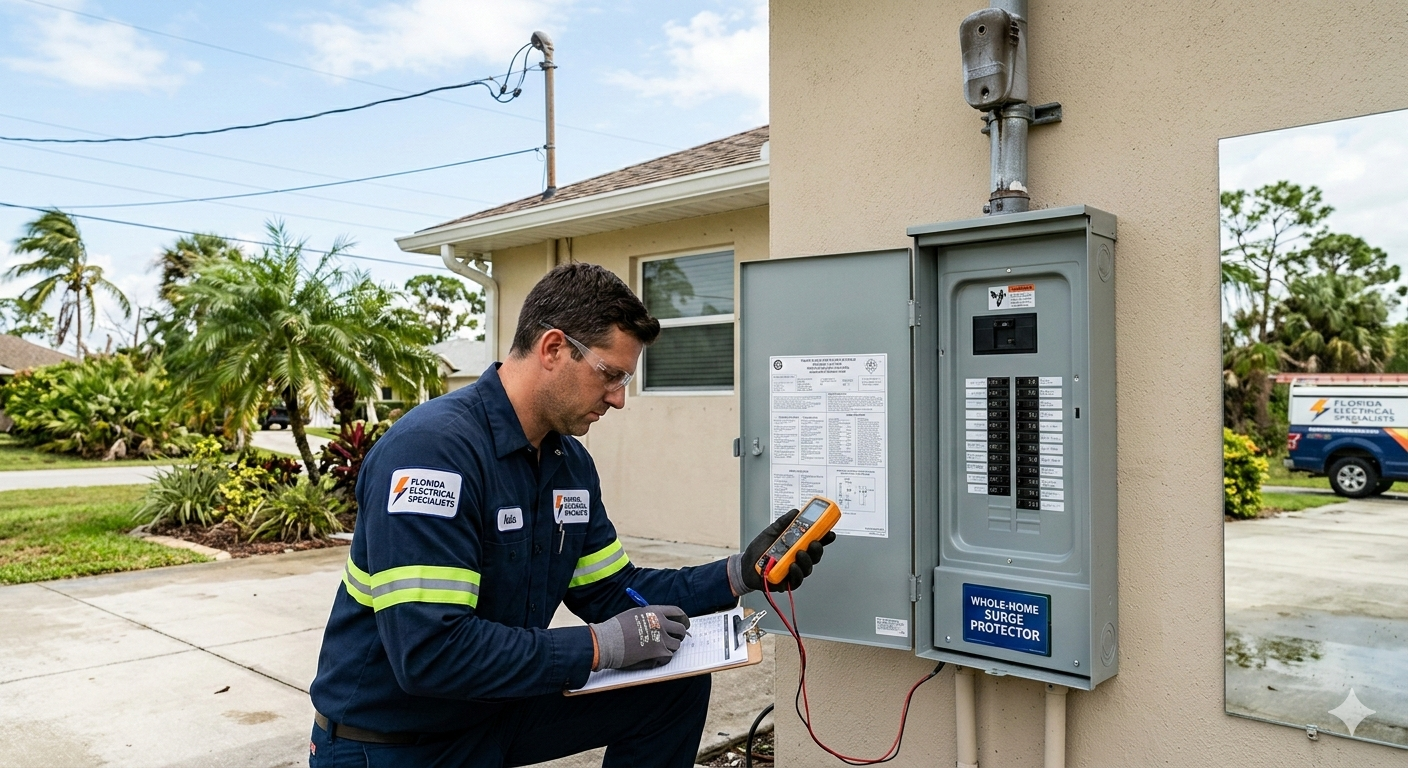
Florida’s tropical climate is world-renowned for its beauty, but as every resident knows, it also brings a unique set of challenges. Between the lightning capital of the country and the heavy winds of hurricane season, our electrical systems take a beating. After a significant weather event, many homeowners check their roofs and windows but overlook the invisible infrastructure that powers their lives: the electrical system.
Neglecting post-storm electrical checks can lead to hidden fire hazards, expensive equipment failure, and long-term structural damage. This guide outlines the essential steps for navigating post-storm recovery and underscores the importance of professional electrical project management in keeping your Florida home safe and compliant.
Why Professional Electrical Project Management Matters
When your home has been subjected to extreme weather, “getting the lights back on” is only the first step. True recovery requires professional project management. At Florida Electrical Specialists (FES), we view every repair—from a simple outlet replacement to a full panel upgrade—as a project requiring meticulous planning.
The Benefits of Expert Oversight:
- Code Compliance: Florida’s building codes are some of the strictest in the nation due to our high-velocity hurricane zones (HVHZ). Professional management ensures all repairs meet National Electrical Code (NEC) standards and local Florida statutes.
- Cost Containment: Without a clear plan, “quick fixes” often lead to redundant work or missed damage that causes future failures.
- Safety Assurance: Water intrusion and wind-blown debris can create “silent killers” like energized conductive surfaces or compromised grounding systems.
Immediate Post-Storm Action Items
Once it is safe to move around your property, perform a visual sweep. Never touch a downed power line or stand in water while checking your electrical panel.
- Check the Service Entry: Look at where the power lines enter your house. If the mast (the pipe attached to your roof) is bent or pulled away, do not attempt to fix it. This is a structural electrical failure that requires an emergency repair.
- Inspect for Water Intrusion: If you see water dripping from light fixtures or notice moisture inside your electrical panel, shut off the main breaker immediately—provided you can do so while standing on a dry surface.
- Smell for “Electrical Burning”: An acrid, ozone-like, or plastic-burning smell indicates a short circuit or an overheating wire.
Recognizing the Signs of Outdated Systems
Storms often act as the “stress test” that exposes an aging system’s weaknesses. If your home struggled during a minor storm, it may be time for an upgrade. Signs of an outdated or failing system include:
- Flickering Lights: This often indicates loose wiring or a compromised neutral wire, both of which are common after high-wind events.
- Frequent Breaker Trips: If your breakers trip every time the AC kicks on post-storm, your panel may be unable to handle the “inrush current” required by your appliances.
- Federal Pacific or Zinsco Panels: If your home was built between the 1950s and 1980s and still has these brands, they are known safety risks and often fail to trip during a surge, leading to fires.
Actionable Tips for Electrical Resilience
1. Understanding the Upgrade Timeline
A full home rewiring or a major panel upgrade isn’t an overnight job. Typically, a panel upgrade takes 4 to 8 hours of on-site work, but the permitting and inspection process through the Florida Department of Business and Professional Regulation can take several days. Planning these upgrades before the peak of hurricane season is essential.
2. Choosing the Right Protection
- Whole-Home Surge Protection: Unlike a simple power strip, a whole-home surge protector is installed at your main panel. According to the NEC 2020 (Section 230.67), surge protection is now required for all new and replaced service equipment in homes. This protects your expensive HVAC systems, refrigerators, and smart home tech from lightning-induced spikes.
- EV Chargers: If you are installing an EV charger, ensure your post-storm check includes an evaluation of the dedicated circuit. Florida’s heat and humidity can accelerate corrosion on high-amperage outdoor connections.
- Weather-Rated Fixtures: Always ensure outdoor lighting is UL-rated for “wet locations” to prevent water ingress during horizontal rain.
3. Communicating with Your Technical Team
When you call Florida Electrical Specialists, being specific helps our technicians arrive prepared. Instead of saying “the power is weird,” try to identify:
- Which specific rooms are affected?
- Did the issue start during the rain or after the wind died down?
- Are there any buzzing or popping sounds coming from specific outlets?
Case Study: The Danger of the “Quick Fix”
A homeowner in South Florida recently attempted to DIY a generator hookup after a tropical storm. By using a “backfeeding” cord (connecting a generator directly to an outlet), they bypassed the home’s main breaker. Not only did this create a massive fire risk for the home, but it also sent electricity back onto the utility lines, endangering the line workers trying to restore power.
FES was called in to rectify the situation. We installed a legal, code-compliant Manual Transfer Switch. This solution allows the homeowner to safely power their essentials during a blackout without risking a lawsuit or a house fire. This demonstrates why professional intervention is non-negotiable for storm-related electrical work.
Florida Electrical Specialists: Your Partner in Safety
Who We Are
Florida Electrical Specialists (FES) is a premier provider of electrical solutions across the Sunshine State. Our team is comprised of highly trained, licensed, and insured electricians who understand the specific rigors of the Florida environment. We don’t just fix wires; we build resilient systems.
Our Services
We provide a comprehensive suite of residential and commercial services, including:
- Emergency Storm Repairs: Rapid response when you need it most.
- Panel Upgrades & Maintenance: Ensuring your “heart of the home” is healthy.
- Indoor & Outdoor Lighting: Aesthetic and functional solutions.
- Safety Inspections: Thorough audits to catch problems before they become emergencies.
Financing Your Safety
We believe that safety should never be a financial burden. Major electrical overhauls—like a full rewiring or a generator installation—are significant investments. FES offers flexible financing options to help homeowners manage costs through manageable monthly payments, ensuring you can protect your family today and pay over time.
Related Posts
- Why Florida Homes Need Whole-Home Surge Protection
- Hurricane Season: Is Your Backup Generator Ready?
- Portable vs. Standby Generators: Which is Best?
Summary and Conclusion
Post-storm recovery is about more than just clearing debris; it is about ensuring the long-term integrity of your home’s electrical system. By performing visual checks, understanding the signs of wear, and investing in technologies like whole-home surge protection, you can mitigate the risks posed by Florida’s volatile weather.
At Florida Electrical Specialists, we specialize in powering your vision with precision and safety. From high-end custom lighting designs to premium electrical upgrades, our expert team is dedicated to delivering exceptional craftsmanship and unmatched reliability in every project. Don’t settle for ordinary electrical work when your home or business deserves extraordinary care and professional expertise.
For consultations or to secure your property’s electrical future today, contact us at Florida Electrical Specialists!