



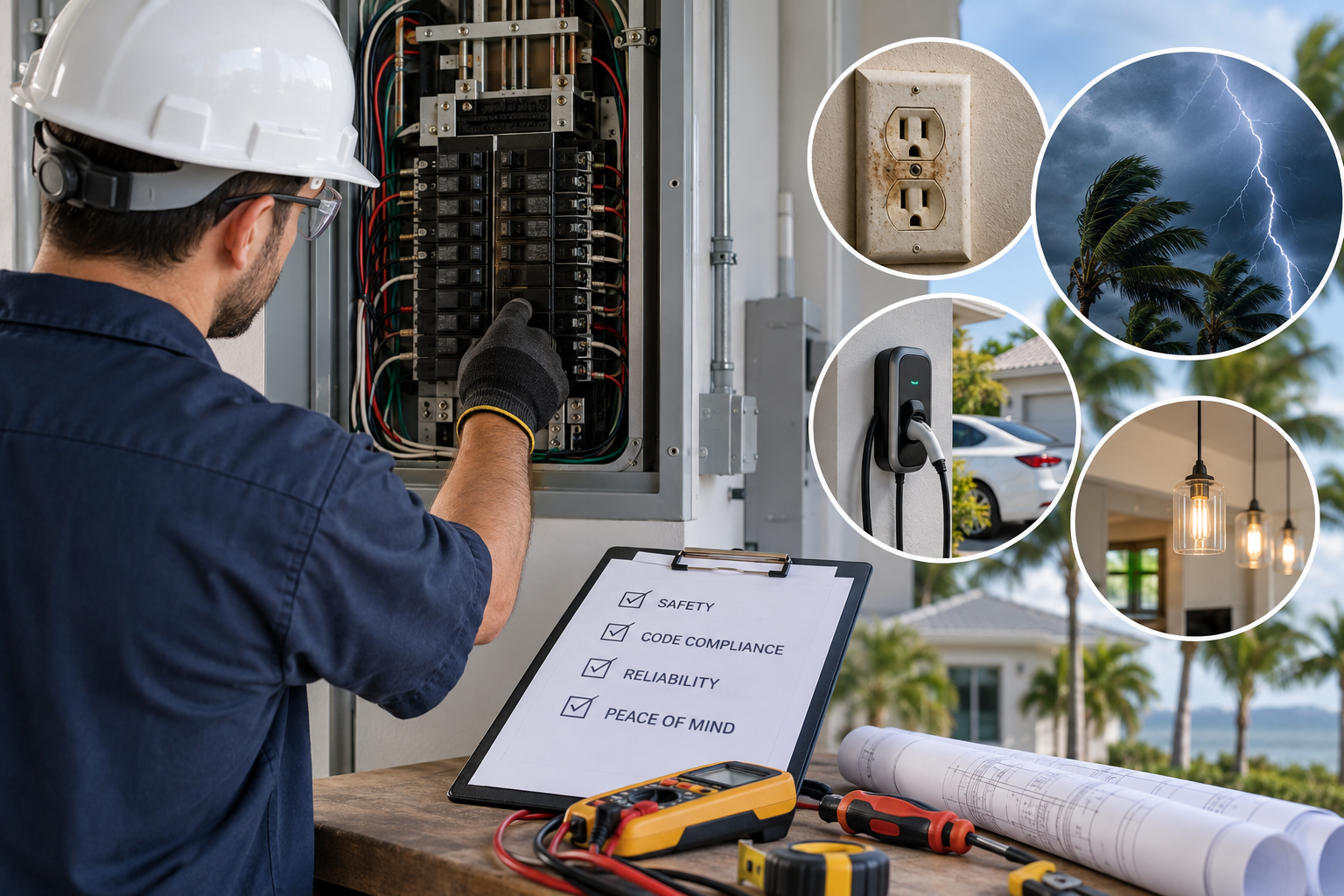
Electrical problems are not always easy to spot. Flickering lights, frequently tripping breakers, warm outlets, or an aging electrical panel can all point to larger safety and compliance concerns. In Florida, heat, humidity, storms, and coastal conditions can put additional demands on electrical systems, making professional electrical planning especially important.
The Florida Building Code, 8th Edition (2023) was developed using the 2020 National Electrical Code (NEC) as its electrical model code. Requirements can also vary based on the project and local jurisdiction, which is why electrical work should be evaluated by a qualified professional. Florida Building Commission code resources provide current code information and resources.
Why Expert Electrical Project Management Matters
A successful electrical project starts with planning, not installation. Professional project management helps identify existing system limitations, calculate electrical loads, coordinate required work, select appropriate equipment, and keep the project aligned with applicable codes.
For property owners, proper planning can help:
- Reduce safety hazards caused by overloaded circuits or improper installations
- Minimize unexpected costs from problems discovered during construction
- Improve communication between property owners, electricians, contractors, and inspectors
- Reduce the possibility of avoidable electrical failures and interruptions
- Ensure new equipment is compatible with the property’s existing electrical capacity
Clear communication is equally important. When contacting an electrical team, explain exactly what is happening, when the problem occurs, which rooms or circuits are affected, and whether specific appliances appear to trigger the issue.
Common Electrical Code Issues to Watch For
Outdated Electrical Panels
Frequent breaker trips, flickering lights, discolored outlets, buzzing sounds, visible corrosion, or insufficient capacity can indicate that an electrical system needs professional evaluation.
A panel does not automatically need replacement simply because it is old. An electrician should evaluate the panel, wiring, service capacity, grounding, and current electrical demand before recommending a replacement or upgrade.
For more information, see Electrical Panel Replacement vs. Upgrade, which explains the difference between replacing existing equipment and increasing electrical capacity.
Improper Wiring and DIY Modifications
DIY electrical work can create problems when wire sizes, breakers, grounding, junction boxes, or connections are not properly matched.
If a breaker repeatedly trips, resetting it without identifying the cause is not a solution. The problem could involve an overloaded circuit, damaged equipment, or an electrical fault that requires professional diagnosis.
Insufficient Electrical Protection
Depending on the installation, modern electrical work may involve GFCI protection, AFCI protection, grounding, disconnects, and surge protection. The applicable requirements depend on the project and location.
Florida’s electrical provisions incorporate the 2020 NEC, including requirements addressing GFCI protection in areas such as garages, laundry areas, and outdoor locations.
Storm protection is also worth considering. A properly selected whole-home surge protection system can provide an additional layer of protection for electrical equipment and sensitive electronics. FES discusses this in greater detail in Why Florida Homes Need Whole-Home Surge Protection.
Plan Major Electrical Upgrades Before Problems Start
The timeline for electrical work depends heavily on the scope of the project. A straightforward fixture replacement is very different from a panel upgrade or whole-home rewiring project.
Before beginning a major upgrade, ask:
- Does the existing service have enough capacity?
- Will the project require permits or inspections?
- Will power need to be temporarily disconnected?
- Will walls or ceilings need to be opened?
- Are future loads such as an EV charger, generator, pool equipment, or HVAC system being considered?
- Are additional repairs likely once existing wiring is inspected?
Planning these details before work begins can help reduce delays and unexpected changes.
Choose Fixtures, Surge Protectors, and EV Chargers Carefully
Electrical equipment should be selected according to the property’s electrical capacity, installation environment, manufacturer requirements, and applicable code.
For lighting projects, homeowners should consider fixture ratings, moisture exposure, energy efficiency, circuit capacity, and whether the equipment is appropriate for indoor or outdoor use. FES also provides guidance on LED lighting trends for Florida homes.
For EV chargers, a professional assessment is important because charging equipment adds a significant electrical load. The NEC addresses EV charging systems under Article 625, while the appropriate installation depends on the equipment and property.
FES’s EV Charger Installation Guide explains why evaluating existing electrical capacity should be part of the installation process.
Example: When a DIY Electrical Fix Misses the Real Problem
Example, not an FES case study: A homeowner notices that several lights flicker whenever the air conditioner starts. Instead of having the system inspected, they replace the bulbs and continue using the existing electrical setup.
The flickering continues because the underlying issue could involve circuit loading, a connection problem, wiring deterioration, or another electrical condition.
A better approach is to document when the problem occurs, identify which circuits are affected, and have a qualified electrician evaluate the system.
Schedule Regular Electrical Inspections
Electrical systems should not only be checked when something goes wrong. Professional inspections can help identify deteriorating components, loose connections, corrosion, overloaded circuits, and other potential concerns.
An inspection can be particularly useful when:
- Buying an older home
- Remodeling or adding new rooms
- Installing an EV charger
- Adding major appliances
- Preparing for a generator installation
- Experiencing repeated breaker trips or electrical abnormalities
Florida’s climate also makes condition checks important for equipment exposed to moisture, heat, and coastal environments.
Why Choose Florida Electrical Specialists?
Who We Are
Florida Electrical Specialists provides residential and commercial electrical services, including repairs, installations, panel work, lighting, EV chargers, and other electrical solutions. FES’s website states that its services are performed by licensed professionals and that the company provides statewide coverage and 24-hour response.
Clients can also verify electrical contractor licensing information through the Florida Department of Business and Professional Regulation (DBPR). DBPR distinguishes between certified electrical contractors, whose licenses are statewide, and registered contractors whose authority is limited to specified local jurisdictions.
Our Services
FES offers a range of electrical solutions, including:
- Residential and commercial electrical work
- Electrical repairs and troubleshooting
- Panel replacements and upgrades
- Outlet installation and repair
- Interior and exterior lighting
- EV charger installation
- Generator connections
- Whole-home surge protection
- Code-compliance corrections
- Emergency electrical services
You can explore the company’s electrical services to see the solutions available for residential and commercial properties.
Financing Options
Major electrical upgrades can represent a significant investment. FES states that it offers flexible financing options for qualifying projects, allowing customers to manage project costs through available payment plans. Because financing terms and eligibility can change, homeowners should contact Florida Electrical Specialists for current program details before making a decision.
Summary: Plan Electrical Work Before It Becomes an Emergency
Common electrical code issues often become more expensive and disruptive when they are ignored. Outdated panels, improper wiring, insufficient protection, and poorly planned electrical additions can create safety concerns and affect the reliability of a property.
The best approach is to identify problems early, communicate them clearly, plan electrical upgrades around current and future needs, and work with qualified professionals familiar with Florida’s electrical requirements.
Whether you need a panel evaluation, lighting upgrade, EV charger, surge protection, electrical repair, or a larger project, Florida Electrical Specialists can help you evaluate your options and plan the work with safety and code compliance in mind.
Related Electrical Resources
- Why Florida Homes Need Whole-Home Surge Protection
- Electrical Panel Replacement vs. Upgrade
- LED Lighting Trends to Brighten Your Florida Home
- The Best EV Chargers for Florida Homeowners in 2026
Trusted Electrical Resources
For additional information, homeowners can consult the National Fire Protection Association (NFPA), the Florida Building Commission, and the Florida Department of Business and Professional Regulation. These resources can help property owners understand electrical safety, building-code resources, and contractor licensing requirements.
At Florida Electrical Specialists, we specialize in powering your vision with precision and safety. From high-end custom lighting designs to premium electrical upgrades, our expert team is dedicated to delivering exceptional craftsmanship and unmatched reliability in every project. Don’t settle for ordinary electrical work when your home or business deserves extraordinary care and professional expertise.
For consultations or to secure your property’s electrical future today, contact us at Florida Electrical Specialists!