


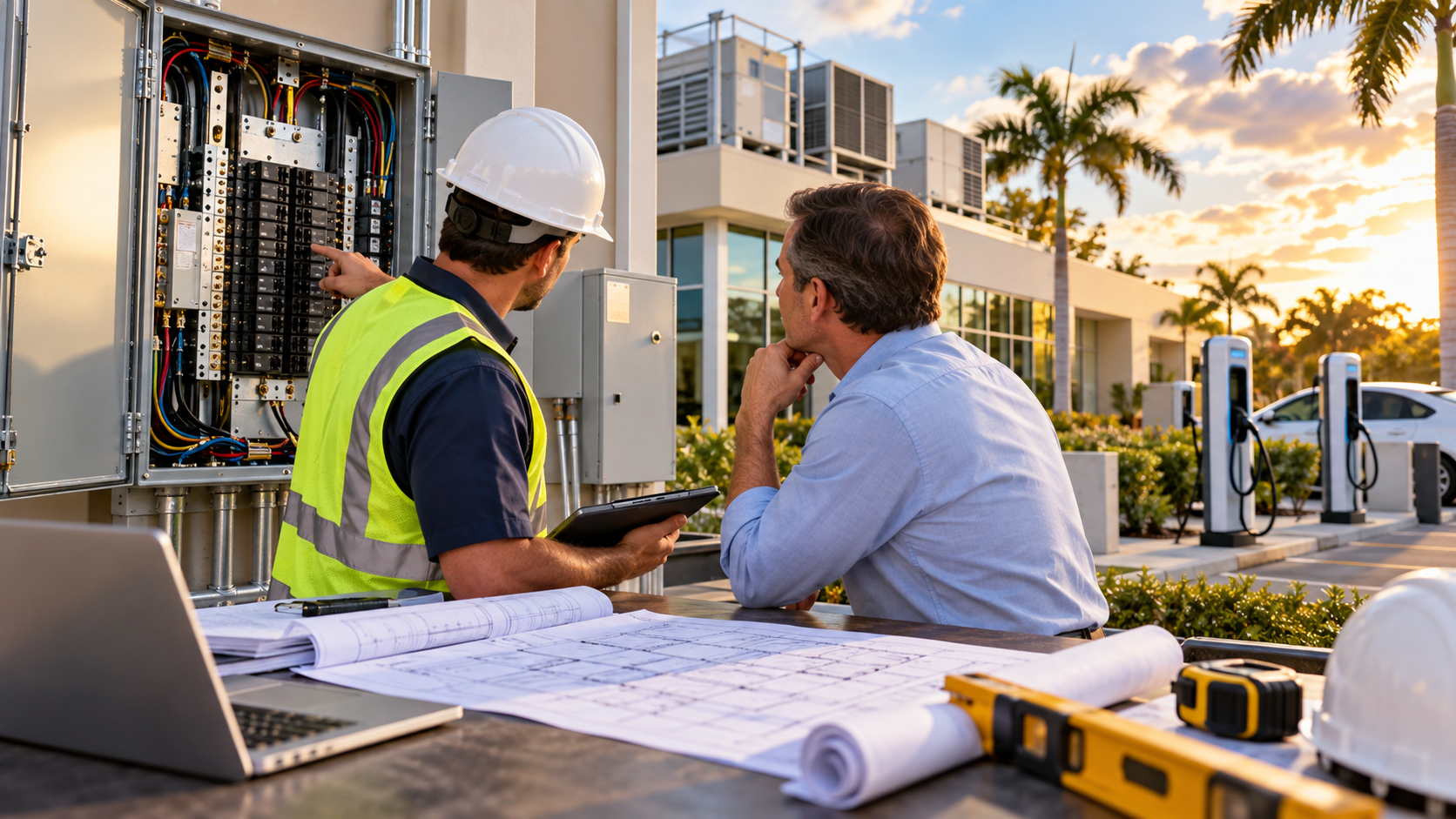
As businesses grow and properties take on new demands, their electrical systems need to keep up. New equipment, additional workstations, upgraded lighting, electric vehicle chargers, and modern appliances can all increase electricity demand. Without proper planning, an electrical system that once worked perfectly may begin to struggle.
For Florida property owners, planning ahead is especially important. Heat, humidity, thunderstorms, and lightning can place additional demands on electrical equipment and make reliable power a priority.
Understanding your property’s electrical capacity can help prevent avoidable disruptions, improve safety, and prepare your building for future needs. With professional planning and installation, you can make upgrades with greater confidence and fewer surprises.
What Is Electrical Load Planning?
Electrical load planning involves evaluating how much electricity a property uses and determining whether its existing electrical system can safely support current and future demand.
This assessment considers the electrical panel, circuits, wiring, connected equipment, and anticipated expansion. Rather than adding circuits or equipment whenever a need arises, a qualified electrician evaluates the entire system before recommending improvements.
Proper planning can help property owners:
- Avoid overloading circuits and repeatedly tripping breakers.
- Identify aging panels, deteriorating wiring, and other potential hazards.
- Prepare for new equipment, renovations, or business expansion.
- Reduce unexpected project costs through better budgeting.
- Improve power reliability and support long term energy efficiency.
A professional assessment also helps establish which upgrades are necessary now and which can be planned for a later phase.
Five Signs Your Electrical System May Need an Upgrade
Not every electrical problem means you need a new panel. However, recurring warning signs deserve professional attention.
- Breakers trip frequently. A breaker that trips repeatedly may indicate an overloaded circuit, a wiring problem, or faulty equipment. Resetting it without identifying the cause does not solve the underlying issue.
- Lights flicker or dim. Occasional flickering can have several causes, but persistent changes when equipment starts up may indicate a circuit or electrical supply issue.
- Your property has an older electrical panel. Age alone does not determine whether a panel needs replacement. Its condition, capacity, components, and maintenance history matter. A qualified electrician can identify concerns and recommend appropriate action.
- You are adding power hungry equipment. Commercial kitchen appliances, HVAC systems, workshop machinery, server equipment, and EV chargers may require dedicated circuits or additional capacity.
- You notice burning odors, buzzing, or unusual heat. These can signal dangerous electrical conditions. Stop using affected equipment when safe, keep away from the suspected hazard, and contact a qualified electrician promptly. If there is smoke or a fire, evacuate and call emergency services.
For an existing problem, professional electrical troubleshooting and repair can help determine whether the cause is a specific circuit, equipment failure, or a larger capacity issue.
How to Plan an Electrical Upgrade Without Unnecessary Costs
A successful electrical project begins before installation.
1. Assess Your Current and Future Needs
List the equipment currently in use and anything you expect to add over the next few years. Include new machinery, HVAC equipment, lighting, kitchen appliances, EV charging, and planned renovations.
Share this information with your electrical contractor. A load calculation can help establish whether the existing system can support the proposed demand and what changes may be needed.
2. Understand the Project Timeline
The timeline depends on the size and complexity of the work.
A straightforward circuit installation may require considerably less time than a service panel replacement or extensive rewiring. Larger projects may involve utility coordination, equipment availability, permits, inspections, and temporary power interruptions.
Before work begins, request a written scope of work, an estimated schedule, and a clear explanation of any expected downtime. Ask which activities could affect normal business operations so you can plan around them.
3. Select Equipment That Fits Your Property
Choosing equipment involves more than comparing prices.
- Electrical panels: Select equipment appropriate for the calculated load and planned expansion.
- Lighting: Consider LED fixtures suited to the space, lighting requirements, and operating hours.
- Surge protection: Ask whether a whole property surge protective device is appropriate for protecting sensitive electronics and other connected equipment.
- EV chargers: Confirm the charger’s electrical requirements and whether your existing service can support it.
- Backup power: Evaluate essential loads and determine whether a generator or another backup solution fits your operational needs.
The right equipment should be compatible with your electrical system and installed according to applicable requirements.