



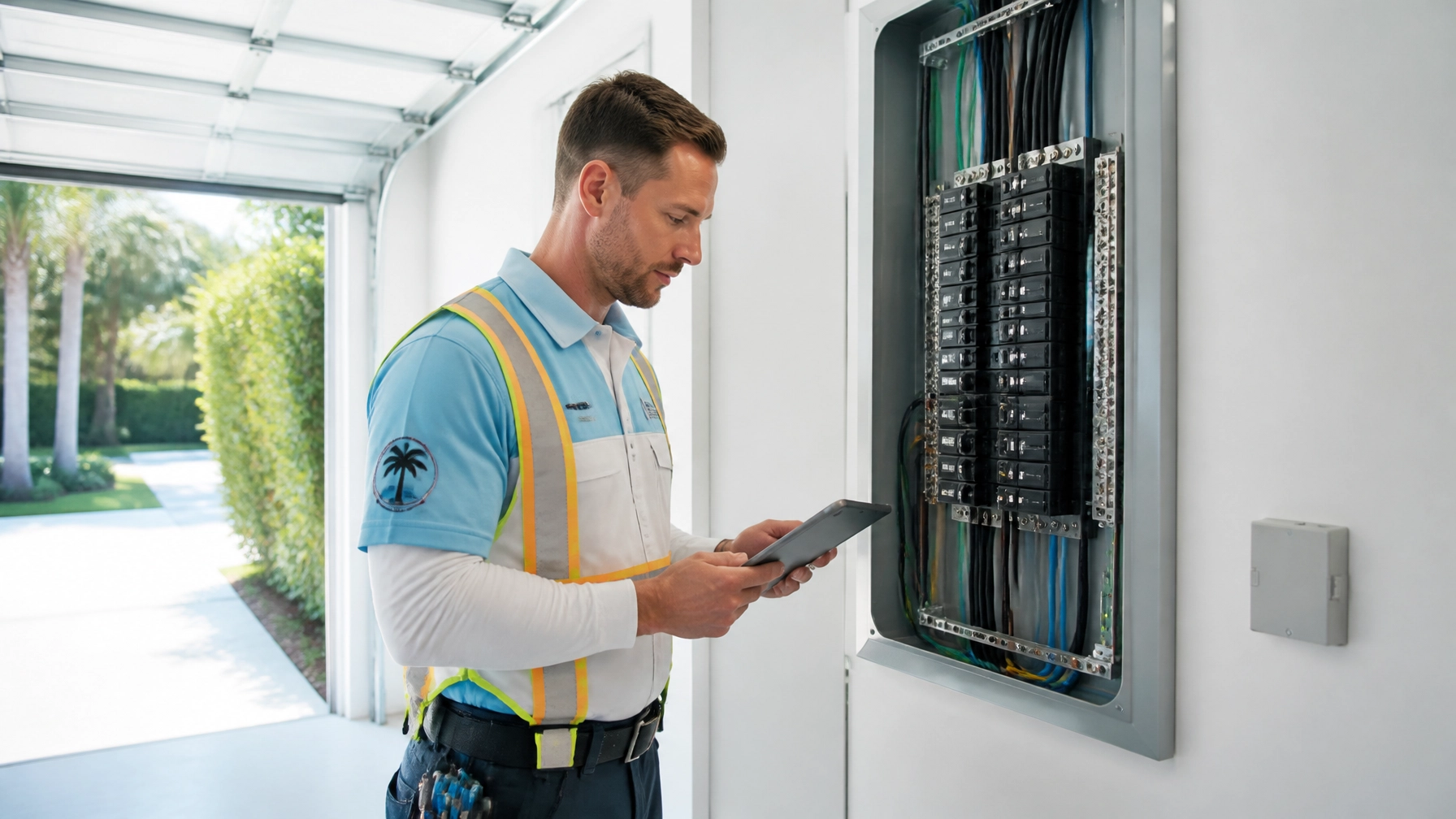
Hi there! If you’ve been scrolling through your phone lately searching for a reliable electrician near me, you’re definitely not alone. It’s late June 2026, and here in the Sunshine State, we’re just days away from a massive shift in how home improvements are handled. On July 1st, the new Florida House Bill 803 (HB 803) officially goes into effect, and it’s changing the game for permits, inspections, and how you deal with your local building department.
Whether you’re planning a massive electrical panel replacement or just trying to figure out why a single outlet is not working in your kitchen, these rules affect you. There’s a lot of chatter out there, some of it helpful, some of it… well, a bit confusing. That’s why we’ve put together this guide to the 10 most important things Florida homeowners need to know before they hire a pro or pull a permit this summer.
1. The $7,500 "Exemption" Trap (Read the Fine Print!)
You might have heard the headline: "Florida eliminates permits for jobs under $7,500!" While that’s true for things like non-electric fences or minor cosmetic work, there is a huge "BUT" involved.
HB 803 explicitly excludes electrical, plumbing, and mechanical work from this exemption. That means if you’re doing an electrical panel upgrade or installing a new dedicated circuit for an appliance, you still need a permit, regardless of whether the job costs $500 or $5,000. Don't let an unlicensed "handyman" tell you that permits aren't required anymore just because the project is small. If it’s electrical, the state still wants a licensed pro to ensure it’s up to the Florida Building Code.
2. The 5-Day "Fast Track" for Smaller Jobs
If your project is valued under $15,000, which covers most residential repairs like fixing a circuit breaker that keeps tripping or a GFCI outlet installation, the new law is actually on your side. Local building departments are now required to review these "small-scale" permits within 5 business days.
This is huge for homeowners. In the past, waiting weeks for a permit to fix a basic electrical issue was common. Now, the state is forcing cities to move faster, so your emergency electrician can get in, get the permit, and get the job done without the bureaucratic bottleneck.

3. 30 Days to Review Larger Residential Projects
For bigger jobs, think full home rewires or high-end EV charger installation setups that involve more complex load calculations, the law sets a 30-business-day limit for the initial permit review. If your home is under 7,500 square feet, your local municipality can’t let your application sit on a desk for months. This predictability makes it much easier for you and your contractor to schedule work and stick to a timeline.
4. HOAs Can No Longer Hold You Hostage
This is one of our favorite parts of HB 803. Previously, many Homeowners Associations (HOAs) or Architectural Review Committees (ARCs) wouldn't even look at your application until you had a government-issued permit in hand. But you couldn't get a permit without showing the city that the HOA was okay with the work. It was a classic "chicken or the egg" nightmare.
Under the new 2026 rules, an HOA cannot require a government permit as a prerequisite for their own review. You can now get your HOA approval moving simultaneously with your permit application. This can shave weeks off your project timeline.
5. Your Permit Now Lasts Longer
Tired of permits expiring right as the work is finishing up? HB 803 creates a uniform expiration rule for single-family dwellings. Your electrical permit now expires one year after it's issued, OR on the effective date of the next edition of the Florida Building Code, whichever is later. This gives you much more breathing room if there are equipment backorders or scheduling delays.

6. "Project Splitting" is Officially Banned
Some people thought they could get clever and split a $20,000 renovation into three $7,000 "mini-projects" to bypass permits. HB 803 specifically bans this practice. If the work is part of a larger, single improvement, it must be permitted as such. Since most electrical work requires a permit anyway, this doesn't change much for us, but it’s a good reminder that honesty is the best policy when dealing with the building department.
7. Digital is the New Standard
If your local building department is still stuck in 1995 with paper forms and physical "runners," that’s about to change. The new law pushes for electronic submissions and communications. This means your 24 hour electrician can often pull permits online in the middle of the night for urgent repairs, ensuring that your emergency electrician services stay fully compliant even when the city offices are closed.
8. The Rise of "Private Providers"
Are you in a county where the building inspectors are backed up for weeks? HB 803 narrows what local officials can review if you hire a Private Provider (a third-party licensed inspector). If a private provider signs off on your electrical panel upgrade, the city’s role is mostly limited to checking that the paperwork is correct. This is a great "cheat code" for homeowners who need their power back on or their project finished now.

9. EV Chargers & Whole House Surge Protectors
As we see more electric vehicles on Florida roads, EV charger installation has become one of our most requested services. Combined with the need for a whole house surge protector (essential during our famous Florida thunderstorms), these projects are exactly what HB 803 aims to streamline. While you still need a permit, the faster review times mean you can go from "I just bought a Tesla" to "I’m charging at home" much faster than last year.
10. Why Safety Still Comes First
At the end of the day, HB 803 is about making the process faster, not looser. The technical standards of the Florida Building Code haven't changed. Electricity is still dangerous if handled by someone who doesn't know the difference between a neutral and a ground.
Whether you’re dealing with a circuit breaker that keeps tripping or you need a brand-new GFCI outlet installation near your pool, hiring a licensed, insured professional is the only way to ensure your home stays safe and your insurance remains valid.
Need a Licensed Electrician in Florida?
Navigating the new HB 803 rules can feel like a full-time job, but you don’t have to do it alone. At Florida Electrical Specialists, we’re not just experts in wiring, we’re experts in the law and the permits that keep your home compliant.
From electrical panel replacement to finding out why that one outlet is not working, we serve homeowners, realtors, and contractors across all 67 Florida counties. We offer 24-hour response times and upfront estimates with no hidden fees.
Contact Florida Electrical Specialists today for a free estimate on your next project!

Frequently Asked Questions (FAQ)
Q: Do I need a permit for a small repair under HB 803?
A: Yes. If the repair involves electrical, plumbing, or mechanical work, a permit is still required by Florida law, even if the cost is under $7,500.
Q: How fast will my permit be approved under the new 2026 rules?
A: For most residential repairs under $15,000, the building department has 5 business days to review your application. For larger residential projects, they have 30 business days.
Q: Can my HOA stop me from starting work while I wait for a permit?
A: HB 803 prevents HOAs from requiring a government permit as a prerequisite for their own review. You can get HOA approval and your permit moving at the same time.
Q: What happens if I perform electrical work without a permit?
A: Beyond the safety risks, you could face fines, issues when selling your home, and your homeowner's insurance might deny claims related to unpermitted work.
Q: Does HB 803 apply to commercial properties?
A: The $7,500 exemption and many of the expedited review rules are specifically focused on single-family dwellings. Commercial requirements often differ: always check with a licensed pro.
