



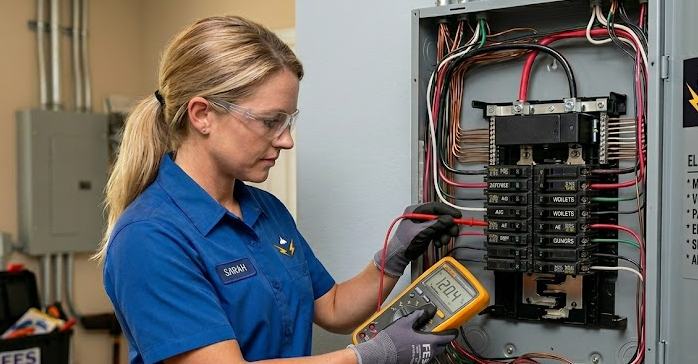
Every year, thousands of house fires across the United States are attributed to electrical malfunctions. In a state like Florida, where humidity, salt air, and intense tropical storms are part of daily life, the risks are even more pronounced. Your home’s electrical system is a complex network hidden behind your walls. While it is easy to ignore what you cannot see, neglecting these systems can lead to catastrophic consequences.
At Florida Electrical Specialists, we believe that every homeowner should be empowered with the knowledge to identify red flags before they turn into emergencies. This guide explores how to detect hidden hazards, the importance of professional project management, and why Florida specific safety standards are non-negotiable for your peace of mind.
The Invisible Threat: Why Electrical Project Management Matters
Many homeowners view electrical work as a series of quick fixes. However, major upgrades like a full house rewiring or a main service panel replacement require rigorous project management. When you hire an expert team, you are not just paying for labor; you are investing in a structured process that ensures safety and longevity.
Proper electrical project management involves:
- Code Compliance: Ensuring all work meets the National Electrical Code (NEC) and specific Florida building codes.
- Clear Communication: Keeping the homeowner informed about the scope of work, potential disruptions, and budget transparency.
- Safety Planning: Implementing load calculations to prevent circuit overloads that lead to heat buildup and fires.
- Long Term Reliability: Using high quality materials that withstand the corrosive environment of the Gulf Coast and Atlantic regions.
Without a managed approach, “quick fixes” often bypass safety protocols, leading to unexpected costs and potential power failures when your system is under heavy load, such as during a summer heatwave.
Recognizing the Signs of an Outdated Electrical System
The first step in fire prevention is knowing when your system is waving a red flag. If your home was built more than 25 years ago and hasn’t had a significant electrical overhaul, you likely have hidden hazards.
1. Flickering or Dimming Lights
If your lights flicker when the air conditioner kicks on or when you use a high wattage appliance like a microwave, your circuits are likely overloaded. This indicates that your system is struggling to meet the modern demand for power.
2. Discolored Outlets and Switches
Take a walk through your home and look at your wall plates. If you see any yellowing, browning, or char marks, stop using that outlet immediately. This is a sign of “arcing,” where electricity jumps between loose connections, creating intense heat that can ignite the wood or insulation inside your walls.
3. Frequent Tripped Breakers
Circuit breakers are designed to shut off power when the system is overloaded. If you find yourself constantly resetting switches at the panel, the breaker is doing its job, but it is also telling you that the system is failing to handle your electrical load.
4. Burning Smells or Sizzling Sounds
A healthy electrical system is silent and odorless. If you smell something resembling “burnt plastic” or hear a faint buzzing or clicking sound behind a wall, you are likely witnessing a fire in its earliest stages.
Navigating the Timeline for Major Electrical Upgrades
Upgrading your home’s electrical infrastructure is a significant investment. Understanding the timeline helps you plan and ensures you are not caught off guard by a sudden failure.
- Panel Upgrades (1 to 2 Days): Most standard panel upgrades, moving from an old 100 amp service to a 200 amp service, can be completed in a single day, though permitting and utility inspections may add time.
- Whole Home Rewiring (1 to 2 Weeks): For older homes with knob and tube or aluminum wiring, a full rewiring is necessary. This involves accessing walls and ceilings and is best done during a renovation.
- EV Charger Installation (Hours): A dedicated circuit for a Level 2 EV charger is a quick upgrade but requires a professional load calculation to ensure your current panel can handle the extra 40 to 50 amps.
Choosing the Right Hardware for Safety and Performance
The components you choose for your home play a massive role in fire prevention. At Florida Electrical Specialists, we recommend prioritizing quality over the lowest price.
Surge Protectors
In Florida, lightning strikes are a constant threat. While power strips offer some protection for small electronics, they do nothing to protect your HVAC system, refrigerator, or stove. A Whole Home Surge Protection device installed directly at your main panel acts as a shield, diverting excess voltage into the ground before it enters your home’s wiring.
High Quality Fixtures and EV Chargers
With the rise of electric vehicles, many Floridians are installing home charging stations. It is vital to use chargers that are UL listed and installed according to NEC Article 625. Improperly installed chargers are a leading cause of modern residential electrical fires due to the sustained high current they draw.
The Importance of Regular Safety Inspections and Maintenance
Just as you would change the oil in your car, your electrical system requires routine checkups. We recommend a professional safety audit every three to five years, or more frequently if you live in a coastal area where salt air can accelerate the corrosion of copper wiring and breaker contacts.
During a maintenance audit, a licensed electrician will:
- Tighten Connections: Over time, thermal expansion and contraction can loosen wires.
- Test GFCI and AFCI Breakers: These specialized breakers are designed to prevent shocks and fire causing arcs.
- Check Grounding Systems: Proper grounding is essential for lightning protection and the safe operation of appliances.
How to Communicate with Your Technical Team
When you call an electrician, being specific can save time and money. Instead of saying “something is wrong,” try to provide these details:
- Which specific outlets or rooms are affected?
- Does the issue happen at a specific time of day?
- Have you recently added a new appliance or performed any DIY work?
- What is the approximate age of your home and its electrical panel?
Clear communication helps us arrive prepared with the right tools and parts to solve your problem efficiently.
Why Florida Homeowners Trust Florida Electrical Specialists (FES)
Who We Are
Florida Electrical Specialists is a premier provider of residential and commercial electrical services. We are a team of fully licensed and insured professionals dedicated to keeping Florida homes safe. Our deep understanding of the Florida Department of Business and Professional Regulation standards ensures that every job we perform is up to code and built to last.
Our Services
We offer a comprehensive suite of services tailored to the unique needs of the Sunshine State:
- Residential & Commercial Repairs: Fast, reliable fixes for any electrical issue.
- Emergency Services: We are available when you need us most to handle dangerous outages or hazards.
- Panel Upgrades & Rewiring: Modernizing older homes for safety and increased power capacity.
- Lighting Design: Interior and exterior solutions that enhance beauty and security.
- Storm Protection: Installation of surge protectors and backup generator transfer switches.
Flexible Financing Options
We understand that major electrical safety upgrades can be a significant financial commitment. To help our clients prioritize safety without breaking the bank, FES offers various financing options. We believe that every family deserves a fire safe home, regardless of their immediate budget.
Case Study: The Danger of the “Quick Fix”
We recently worked with a homeowner in the Tampa area who attempted to install a new hot tub circuit themselves. To save money, they used a wire gauge that was too small for the distance and the amperage required. Within a month, the insulation on the wire began to melt, causing smoke to pour out of the crawlspace.
Our team arrived, identified the “DIY” error, and replaced the entire run with code compliant wiring and a proper GFCI disconnect. This served as a stark reminder that when it comes to electricity, there are no shortcuts. Professional intervention saved this home from a devastating fire.
Adhering to the National Electrical Code (NEC)
Our work is always guided by the National Fire Protection Association (NFPA) and the NEC. In Florida, we pay special attention to sections regarding “Damp and Wet Locations.” Because of our tropical climate, outdoor outlets and fixtures must be weather resistant and properly sealed to prevent moisture from causing short circuits.
Related Posts
- The Ultimate Guide to Whole Home Surge Protection in Florida
- LED Lighting Trends to Brighten Your Florida Home
- Hurricane Season: Is Your Backup Generator Ready?
Summary and Conclusion
Detecting hidden electrical fire hazards is a combination of observation and professional expertise. By looking for signs of aging, such as flickering lights or discolored outlets, and investing in modern solutions like whole home surge protection, you can significantly reduce the risk of a fire.
The key to a safe home lies in expert project management and a commitment to code compliance. Whether you are upgrading your panel to accommodate a new EV charger or simply scheduling a routine safety audit, working with a licensed professional is the only way to ensure the job is done right.
At Florida Electrical Specialists, we specialize in powering your vision with precision and safety. From high-end custom lighting designs to premium electrical upgrades, our expert team is dedicated to delivering exceptional craftsmanship and unmatched reliability in every project. Don’t settle for ordinary electrical work when your home or business deserves extraordinary care and professional expertise.
For consultations or to secure your property’s electrical future today, contact us at Florida Electrical Specialists!