



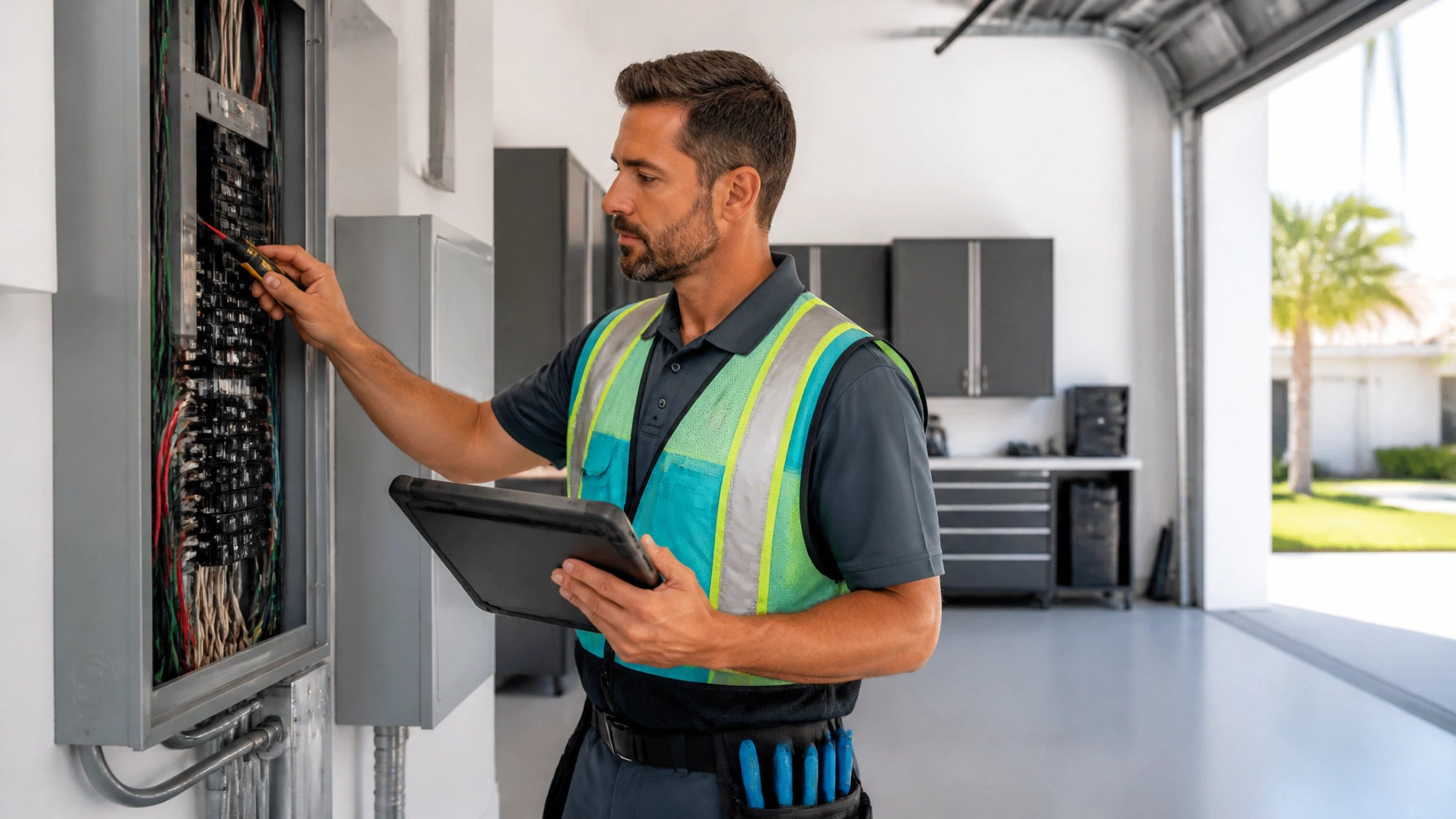
It’s the middle of a sweltering July afternoon in Florida. You’ve got the AC cranking, the laundry going, and you’re about to start the dishwasher when: click: everything goes dark. You head out to the garage, flip the breaker back on, and five minutes later, it happens again.
Frustrating? Absolutely. But a tripping circuit breaker isn’t just an inconvenience; it’s a safety feature doing its job. Think of your breaker as a sentinel guarding your home against electrical fires. When it "trips," it's cutting off the power because it detected a dangerous situation.
In the Sunshine State, our homes face unique electrical challenges: from salt-air corrosion to extreme lightning activity. If you find yourself searching for an "emergency electrician" because your power won't stay on, it's time to understand what's happening behind your walls.
Here are the 10 most common reasons your Florida home’s circuit breaker keeps tripping and how you can address them safely.
1. Circuit Overload (The Most Common Culprit)
A circuit overload happens when you’re asking a single circuit to carry more electricity than it’s rated for. In older homes, a single 15-amp circuit might be powering three different rooms. When you plug in a high-wattage hair dryer while the TV and space heater are running, the circuit reaches its limit.
The Fix: Redistribute your appliances. Don't run the microwave and the toaster on the same outlet at the same time. If your home simply can't keep up with modern life, you likely need an electrical panel upgrade to add more capacity.
2. Short Circuits
A short circuit is more serious than an overload. It occurs when a "hot" wire touches a "neutral" wire. This creates a sudden, massive surge of current that forces the breaker to trip instantly. You might notice a burning smell or even see a visible black smudge around an outlet.
The Fix: This is a fire hazard. If a breaker trips immediately after you reset it, stop. Turn off the power and call a licensed electrical contractor in Florida to locate the fault.
3. Ground Faults
Similar to a short circuit, a ground fault happens when a "hot" wire touches a ground wire or a grounded part of a metal box. In Florida, ground faults are frequently caused by moisture. Whether it’s rain getting into an outdoor outlet or high humidity in a crawlspace, water and electricity are a bad mix.
The Fix: Check your GFCI outlet installation in bathrooms and kitchens. These specialized outlets are designed to trip even faster than a breaker to prevent shocks in wet areas.
4. Florida’s Harsh Salt Air and Corrosion
If you live near the coast: whether in Brevard County or Charlotte County: salt air is your electrical system's worst enemy. Salt and humidity cause copper wires and bus bars to corrode. This leads to poor connections, overheating, and frequent "nuisance" tripping.
The Fix: Regular inspections are key. If you see white powdery residue or rust on your electrical panel, it’s time for a professional evaluation.

5. Aging Electrical Panels
Technology has changed, but many Florida homes are still running on panels from the 1970s or 80s. Panels like those made by Federal Pacific or Zinsco are notorious for failing to trip when they should: or tripping constantly because they can no longer handle the load.
The Fix: If your panel is over 25 years old, consider a full electrical panel replacement. Modern panels are safer, more efficient, and often required by insurance companies before they’ll renew a policy.
6. Faulty or Damaged Appliances
Sometimes, the problem isn't your house; it's what you're plugging into it. An old refrigerator with a failing compressor or a vacuum cleaner with a frayed cord can draw excessive current or create a short circuit that trips your breaker.
The Fix: Unplug everything on the circuit and reset the breaker. Plug items back in one by one. If one specific appliance causes the trip every time, you've found your villain.
7. Loose Wiring and Connections
Over time, the wires connected to your circuit breakers can wiggle loose. This is often due to the constant expansion and contraction caused by the Florida heat. A loose wire creates resistance, which generates heat, which: you guessed it: trips the breaker.
The Fix: Don't try to tighten these yourself. The main lugs in a panel remain live even when the main breaker is off. Let a pro handle the tightening.
8. Arc Faults (AFCI Issues)
Modern Florida building codes require Arc-Fault Circuit Interrupter (AFCI) breakers in most living areas. These are designed to detect "arcing": when electricity jumps between loose wires: which is a leading cause of house fires.
The Fix: AFCI breakers are sensitive. They can sometimes be tripped by "noisy" electronics like old vacuum motors. If your AFCI keeps tripping, a technician can determine if it’s a nuisance trip or a genuine fire risk.
9. Undersized Service for New Tech
Are you adding an EV charger installation or a new, high-efficiency HVAC system? These high-draw items often require more power than your existing 100-amp service can provide. If your breakers trip when the AC kicks on, your service is likely undersized.
The Fix: Florida Electrical Specialists can help with Florida electrical permit assistance to upgrade your home to 200-amp service, ensuring you have plenty of "juice" for all your modern gadgets.
10. A Worn-Out Circuit Breaker
Breakers are mechanical devices with springs and levers inside. Like any mechanical part, they eventually wear out. A weak breaker might trip at a lower amperage than it’s supposed to, or it might feel "spongy" when you try to reset it.
The Fix: Replacing a single breaker is a quick and affordable job for a professional, but it’s the perfect time to have the rest of the panel inspected for health.

Troubleshooting 101: What to Do When It Trips
Before you pick up the phone to search for an "electrician near me," you can try these safe troubleshooting steps:
- Identify the Circuit: Look at the panel directory. Which room lost power?
- The "Unplug" Test: Go to that room and unplug everything.
- Reset the Breaker: To reset, you must flip the switch all the way to "OFF" until it clicks, then back to "ON."
- Listen and Smell: If you hear a loud pop or smell smoke immediately upon resetting, turn it off and leave it off.
- Test the Load: If it stays on, plug your devices back in one at a time. This helps you identify if it’s an outlet not working properly or just an overloaded circuit.
When to Call a 24 Hour Electrician
Electricity isn't a DIY project. You should call for professional help immediately if:
- The breaker won't stay reset.
- The panel feels hot to the touch.
- You see sparks or smell burning plastic.
- You have a "flickering" power situation throughout the whole house.
- Your home has sustained a lightning strike (very common in Florida!).
The Importance of Professional, Code-Compliant Repairs
In Florida, the building code is strict for a reason. Our unique climate and weather patterns mean that a "quick fix" can lead to a major disaster. At Florida Electrical Specialists, we’ve resolved over 12,000 electrical issues across the state, ensuring every home we touch meets the latest Florida electrical codes.
Whether you're a homeowner dealing with a pesky kitchen circuit or a realtor needing a pre-sale inspection, working with licensed experts is the only way to ensure your property is safe and insurable.

Protect Your Home from Florida’s Electrical Hazards
Don’t wait for a small trip to turn into a total failure. If your circuit breaker keeps tripping, it’s sending you a message. Whether it’s time for a whole house surge protector to guard against Florida’s lightning or a comprehensive electrical panel upgrade, we’re here to help.
Florida Electrical Specialists provides 24-hour response times for urgent issues across all 67 Florida counties. From Alachua to Broward, we bring the expertise needed to keep your home running safely.
Ready to stop the tripping? Contact Florida Electrical Specialists today for a clear, upfront estimate. Our licensed electricians are standing by to ensure your home’s electrical system is as reliable as the Florida sunshine.
Disclaimer: Electrical requirements may vary by jurisdiction. Always consult local authorities or a licensed Florida electrical professional before attempting repairs or modifications to your electrical system.